PIPA5103436
IL17C Polyclonal Antibody, Invitrogen™
Manufacturer: Thermo Scientific
Select a Size
| Pack Size | SKU | Availability | Price |
|---|---|---|---|
| Each of 1 | PIPA5103436-Each-of-1 | In Stock | ₹ 45,345.50 |
PIPA5103436 - Each of 1
In Stock
Quantity
1
Base Price: ₹ 45,345.50
GST (18%): ₹ 8,162.19
Total Price: ₹ 53,507.69
Antigen
IL17C
Classification
Polyclonal
Conjugate
Unconjugated
Gene
IL17C
Gene Alias
CX2; cytokine CX2; Il17c; IL-17C; IL-21; interleukin 17C; interleukin-17C; UNQ561/PRO1122
Host Species
Rabbit
Purification Method
Affinity chromatography
Regulatory Status
RUO
Gene ID (Entrez)
234836, 27189
Content And Storage
-20°C
Form
Liquid
Applications
Immunohistochemistry (Paraffin), Western Blot
Concentration
1 mg/mL
Formulation
PBS with 50% glycerol and 0.02% sodium azide; pH 7.4
Gene Accession No.
Q8K4C5, Q9P0M4
Gene Symbols
IL17C
Immunogen
A synthesized peptide derived from human IL17C(Accession Q9P0M4), corresponding to amino acid residues R141-C191.
Quantity
100 μL
Primary or Secondary
Primary
Target Species
Human, Mouse
Product Type
Antibody
Isotype
IgG
Related Products
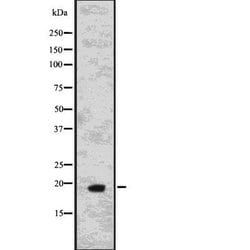
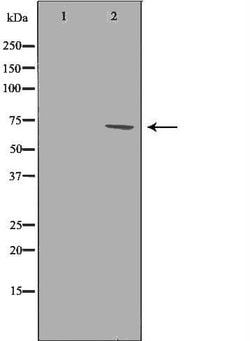
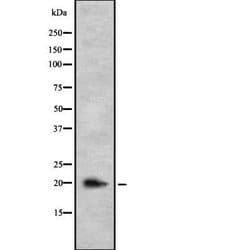
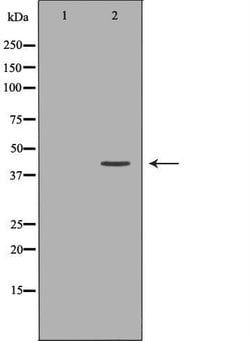
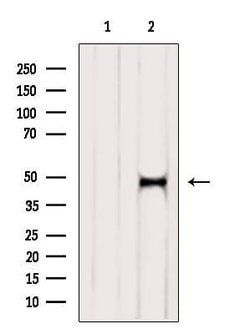
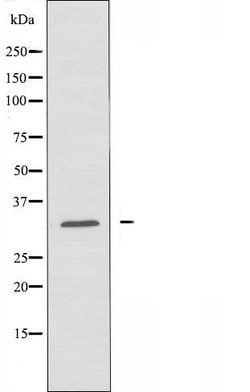
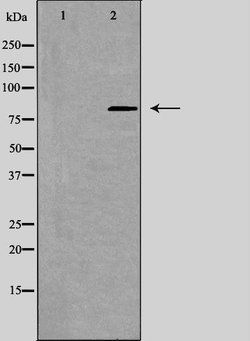
Description
- Antibody detects endogenous levels of total IL17C
- Cytokine that plays a crucial role in innate immunity of the epithelium, including to intestinal bacterial pathogens, in an autocrine manner
- Stimulates the production of antibacterial peptides and proinflammatory molecules for host defense by signaling through the NF-kappa-B and MAPK pathways
- Acts synergically with IL22 in inducing the expression of antibacterial peptides, including S100A8, S100A9, REG3A and REG3G
- Synergy is also observed with TNF and IL1B in inducing DEFB2 from keratinocytes
- Depending on the type of insult, may have both protective and pathogenic properties, either by maintaining epithelial homeostasis after an inflammatory challenge or by promoting inflammatory phenotype
- Enhanced IL17C/IL17RE signaling may also lead to greater susceptibility to autoimmune diseases.