PIPA5103680
CABP5 Polyclonal Antibody, Invitrogen™
Manufacturer: Thermo Scientific
Select a Size
| Pack Size | SKU | Availability | Price |
|---|---|---|---|
| Each of 1 | PIPA5103680-Each-of-1 | In Stock | ₹ 41,607.50 |
PIPA5103680 - Each of 1
In Stock
Quantity
1
Base Price: ₹ 41,607.50
GST (18%): ₹ 7,489.35
Total Price: ₹ 49,096.85
Antigen
CABP5
Classification
Polyclonal
Conjugate
Unconjugated
Gene
CABP5
Gene Alias
CABP3; CaBP5; calcium binding protein 5; calcium-binding protein 3; calcium-binding protein 5
Host Species
Rabbit
Purification Method
Affinity chromatography
Regulatory Status
RUO
Gene ID (Entrez)
56344
Content And Storage
-20°C
Form
Liquid
Applications
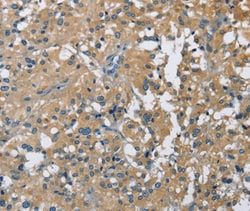
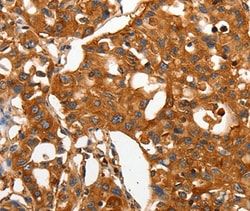
Immunohistochemistry, Western Blot
Concentration
1 mg/mL
Formulation
PBS with 50% glycerol and 0.02% sodium azide; pH 7.4
Gene Accession No.
Q9NP86
Gene Symbols
CABP5
Immunogen
A synthesized peptide derived from human CABP3(Accession Q9NZU6), corresponding to amino acid residues around D50.
Quantity
100 μL
Primary or Secondary
Primary
Target Species
Human
Product Type
Antibody
Isotype
IgG
Related Products

Description
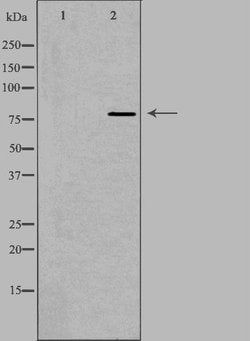
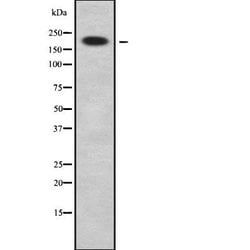
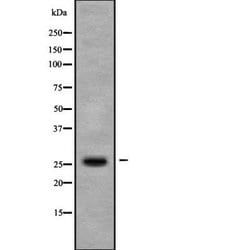
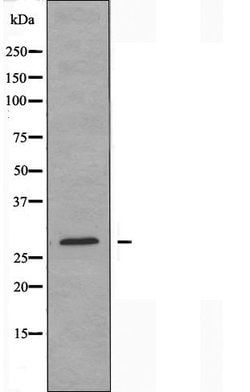
- Antibody detects endogenous levels of total CABP3
- The calcium binding protein (CaBP) family shares much similarity to calmodulin
- It has been shown that CaBP proteins can substitute functionally for, and probably augment the function of, calmodulin
- Calcium binding proteins are a crucial part of calcium mediated cellular signal transduction in the central nervous system
- There are several members of the family with varying expression patterns
- CaBP1 and CaBP2 can be expressed as multiple, alternatively spliced variants in brain and retina
- CaBP3, CaBP4 and CaBP 5 are restricted to retinal rod and cone cells.