CBLN4 Polyclonal Antibody, Invitrogen™
Manufacturer: Thermo Scientific
Select a Size
| Pack Size | SKU | Availability | Price |
|---|---|---|---|
| Each of 1 | PIPA5101515-Each-of-1 | In Stock | ₹ 46,502.50 |
PIPA5101515 - Each of 1
In Stock
Quantity
1
Base Price: ₹ 46,502.50
GST (18%): ₹ 8,370.45
Total Price: ₹ 54,872.95
Antigen
CBLN4
Classification
Polyclonal
Conjugate
Unconjugated
Gene
CBLN4
Gene Alias
AI848962; Cbln4; CBLNL1; cerebellin 4 precursor; cerebellin 4 precursor protein; cerebellin precursor-like 1; Cerebellin4; cerebellin-4; Cerebellin-like glycoprotein 1; UNQ718/PRO1382
Host Species
Rabbit
Purification Method
Affinity chromatography
Regulatory Status
RUO
Gene ID (Entrez)
140689, 228942, 499947
Content And Storage
-20°C
Form
Liquid
Applications
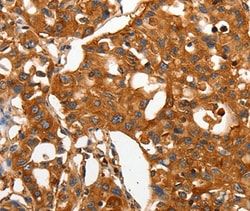
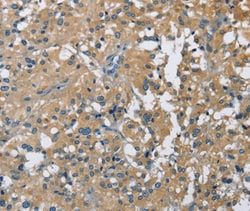
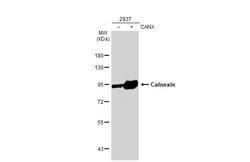
Immunocytochemistry, Immunohistochemistry (Paraffin), Western Blot
Concentration
1 mg/mL
Formulation
PBS with 50% glycerol and 0.02% sodium azide; pH 7.4
Gene Accession No.
Q8BME9, Q9NTU7
Gene Symbols
CBLN4
Immunogen
A synthesized peptide derived from human CBLN4(Accession Q9NTU7), corresponding to amino acid residues V25-A75.
Quantity
100 μL
Primary or Secondary
Primary
Target Species
Human, Mouse, Rat
Product Type
Antibody
Isotype
IgG
Related Products

Description
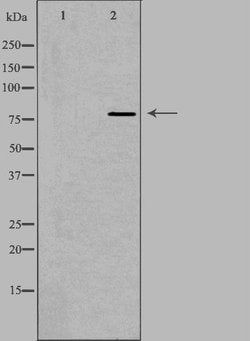
- Antibody detects endogenous levels of total CBLN4
- Cerebellin (CER), which was originally isolated from rat cerebellum, is a hexadecapeptide derived from a larger precursor called Cerebellin 1, also designated precerebellin 1 or Cbln1
- Four propeptides, Cerebellin 1, Cerebellin 2 (Cbln2), Cerebellin 3 (Cbln3) and Cerebellin 4 (Cbln4), comprise the precerebellin subfamily within the C1q protein family
- Cerebellin family members act as transneuronal regulators of synapse development and synaptic plasticity in various brain regions
- Cerebellin and its metabolite, des-Ser(1)Cer, are also expressed in several extra-cerebellar tissues, including adrenal gland
- Cerebellin 1, 2 and 3 assemble into homomeric and heteromeric complexes, thereby influencing each other's degradation and secretion
- Cerebellin 3 is not able to form homomeric complexes, and can only be secreted upon forming a heteromeric complex with Cerebellin 1
- Decreased concentrations of Cerebellin have been found in the brain of patients with olivopontocerebellar atrophy (OPCA) and Shy-Drager syndrome, suggesting a role for Cerebellin in the pathology of these diseases.