PTPRB Polyclonal Antibody, Invitrogen™
Manufacturer: Thermo Scientific
Select a Size
| Pack Size | SKU | Availability | Price |
|---|---|---|---|
| Each of 1 | PIPA5104088-Each-of-1 | In Stock | ₹ 45,968.50 |
PIPA5104088 - Each of 1
In Stock
Quantity
1
Base Price: ₹ 45,968.50
GST (18%): ₹ 8,274.33
Total Price: ₹ 54,242.83
Antigen
PTPRB
Classification
Polyclonal
Conjugate
Unconjugated
Gene
PTPRB
Gene Alias
3230402H02Rik; C130094E24; HPTPB; HPTP-BETA; protein tyrosine phosphatase, receptor type B; protein tyrosine phosphatase, receptor type, B; protein tyrosine phosphatase, receptor type, beta polypeptide; protein-tyrosine phosphatase beta; PTPB; Ptprb; Ptpz; receptor-type tyrosine-protein phosphatase beta; Rptpb; R-PTP-BETA; vascular endothelial protein tyrosine phosphatase; VEPTP; VE-PTP
Host Species
Rabbit
Purification Method
Affinity chromatography
Regulatory Status
RUO
Gene ID (Entrez)
19263, 314843, 5787
Content And Storage
-20°C
Form
Liquid
Applications
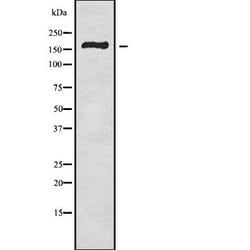
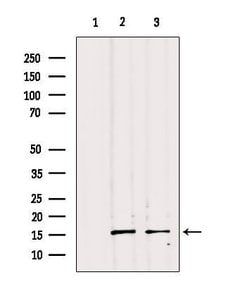
Immunohistochemistry (Paraffin), Western Blot
Concentration
1 mg/mL
Formulation
PBS with 50% glycerol and 0.02% sodium azide; pH 7.4
Gene Accession No.
B2RU80, P23467
Gene Symbols
PTPRB
Immunogen
A synthesized peptide derived from human PTPRB(Accession P23467), corresponding to amino acid residues S302-R352.
Quantity
100 μL
Primary or Secondary
Primary
Target Species
Human, Mouse, Rat
Product Type
Antibody
Isotype
IgG
Related Products


Description
- Antibody detects endogenous levels of total PTPRB
- The protein encoded by this gene is a member of the protein tyrosine phosphatase (PTP) family
- PTPs are known to be signaling molecules that regulate a variety of cellular processes including cell growth, differentiation, mitotic cycle, and oncogenic transformation
- This PTP contains an extracellular domain, a single transmembrane segment and one intracytoplasmic catalytic domain, thus belongs to receptor type PTP
- The extracellular region of this PTP is composed of multiple fibronectin type_III repeats, which was shown to interact with neuronal receptor and cell adhesion molecules, such as contactin and tenascin C
- This protein was also found to interact with sodium channels, and thus may regulate sodium channels by altering tyrosine phosphorylation status
- The functions of the interaction partners of this protein implicate the roles of this PTP in cell adhesion, neurite growth, and neuronal differentiation
- Alternate transcript variants encoding different isoforms have been found for this gene.