PIPA5104416
Varicella zoster Virus (strain Dumas) Polyclonal Antibody, Invitrogen™
Manufacturer: Thermo Scientific
Select a Size
| Pack Size | SKU | Availability | Price |
|---|---|---|---|
| Each of 1 | PIPA5104416-Each-of-1 | In Stock | ₹ 44,099.50 |
PIPA5104416 - Each of 1
In Stock
Quantity
1
Base Price: ₹ 44,099.50
GST (18%): ₹ 7,937.91
Total Price: ₹ 52,037.41
Antigen
Varicella zoster Virus (strain Dumas)
Classification
Polyclonal
Conjugate
Unconjugated
Gene Alias
varicella zoster virus ge; Varicellovirus; VZV
Immunogen
A synthesized peptide derived from human virus KR1_VZVD, corresponding to a region within N-terminal amino acids.
Quantity
100 μL
Primary or Secondary
Primary
Content And Storage
-20°C
Form
Liquid
Applications
Western Blot
Concentration
1 mg/mL
Formulation
PBS with 50% glycerol and 0.02% sodium azide; pH 7.4
Host Species
Rabbit
Purification Method
Affinity chromatography
Regulatory Status
RUO
Target Species
Human, Mouse, Virus
Product Type
Antibody
Isotype
IgG
Related Products



Description
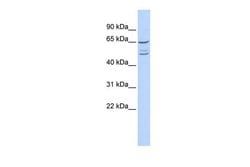
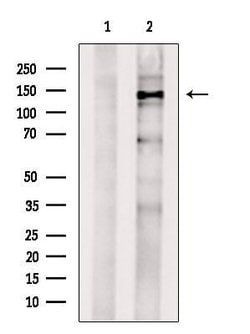
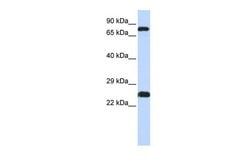
- Antibody detects endogenous levels of total KR1_VZVD
- Varicella Zoster Virus (VZV), a member of the human herpes virus family, causes two distinct clinical manifestations: childhood chickenpox(Varicella) and shingles (zoster)
- Varicella is the outcome of the primary infection with VZV, whereas, zoster is the result of VZV reactivation from latently infected sensory ganglia which occurs precominantly in aging and immunosuppressed individuals
- Glycoprotein E (gE), a 623 amino acid type I integral membrane protein, is expressed on plasma membranes and in the cytoplasm of VZV infected cells, where it is presumed to be present in the membranes of intracellular vesicles or organelles
- VZV gE complexes with gI in the rough endoplasmic reticulum, and most gE exists in the form of gE to gI heterodimers in infected cells
- VZV gE is also a predominant component of the virion envelope
- The functions of gE, which is encoded by ORF68, are of particular interest because it has been demonstrated that ORF68 is essential for VZV replication
- In contrast, the genes for gE proteins can be deleted from herpes simplex virus and pseudorabies virus, albeit with significant reductions in infectivity in cell culture and in animal models
- Since the VZV genome does not encode a homologue of gD, VZV gE may have functions that are usually segregated between gD and gE, or the gE to gI complex, in other alphaherpesviruses.