BCAR3 Polyclonal Antibody, Invitrogen™
Manufacturer: Thermo Scientific
Select a Size
| Pack Size | SKU | Availability | Price |
|---|---|---|---|
| Each of 1 | PIPA5104511-Each-of-1 | In Stock | ₹ 46,502.50 |
PIPA5104511 - Each of 1
In Stock
Quantity
1
Base Price: ₹ 46,502.50
GST (18%): ₹ 8,370.45
Total Price: ₹ 54,872.95
Antigen
BCAR3
Classification
Polyclonal
Conjugate
Unconjugated
Gene
BCAR3
Gene Alias
AI131758; And34; AND-34; Bcar3; breast cancer anti-estrogen resistance 3; breast cancer antiestrogen resistance 3 protein; breast cancer anti-estrogen resistance protein 3; dJ1033H22.2 (breast cancer anti-estrogen resistance 3); KIAA0554; novel SH2-containing protein 2; NSP2; OTTHUMP00000011961; p130Cas-binding protein AND-34; SH2 domain-containing protein 3B; SH2D3B; UNQ271/PRO308
Host Species
Rabbit
Purification Method
Affinity chromatography
Regulatory Status
RUO
Gene ID (Entrez)
310838, 8412
Content And Storage
-20°C
Form
Liquid
Applications
Immunocytochemistry, Immunohistochemistry (Paraffin), Western Blot
Concentration
1 mg/mL
Formulation
PBS with 50% glycerol and 0.02% sodium azide; pH 7.4
Gene Accession No.
O75815
Gene Symbols
BCAR3
Immunogen
A synthesized peptide derived from human BCAR3(Accession O75815), corresponding to amino acid residues M774-E824.
Quantity
100 μL
Primary or Secondary
Primary
Target Species
Human, Rat
Product Type
Antibody
Isotype
IgG
Related Products




Description
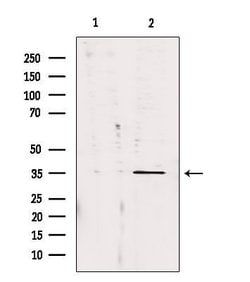
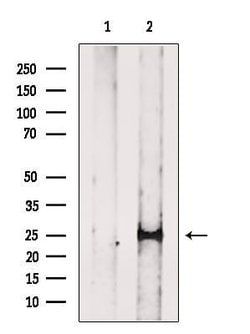
- Antibody detects endogenous levels of total BCAR3
- Breast tumors are initially dependent on estrogens for growth and progression and can be inhibited by anti-estrogens such as tamoxifen
- However, breast cancers progress to become anti-estrogen resistant
- Breast cancer anti-estrogen resistance gene 3 was identified in the search for genes involved in the development of estrogen resistance
- The gene encodes a component of intracellular signal transduction that causes estrogen-independent proliferation in human breast cancer cells
- The protein contains a putative src homology 2 (SH2) domain, a hall mark of cellular tyrosine kinase signaling molecules, and is partly homologous to the cell division cycle protein CDC48.