Phospho-PKC zeta (Thr410) Polyclonal Antibody, Invitrogen™
Manufacturer: Thermo Scientific
Select a Size
| Pack Size | SKU | Availability | Price |
|---|---|---|---|
| Each of 1 | PIPA5104967-Each-of-1 | In Stock | ₹ 45,968.50 |
PIPA5104967 - Each of 1
In Stock
Quantity
1
Base Price: ₹ 45,968.50
GST (18%): ₹ 8,274.33
Total Price: ₹ 54,242.83
Antigen
Phospho-PKC zeta (Thr410)
Classification
Polyclonal
Conjugate
Unconjugated
Gene
PRKCZ
Gene Alias
14 - 3 - 3 - zeta isoform; 14-3-3-zetaisoform; AI098070; aPKCzeta; atypical protein kinase C; C80388; kinase nPKC-zeta; KPCZ; nPKC-zeta; nPKC-zeta PRKCZ; PKC2; Pkcz; PKC-ZETA; Prkcz; protein kinase C zeta; protein kinase C zeta subspecies; protein kinase C zeta type; protein kinase C, zeta; r14-3-3; R74924; zetaPKC
Host Species
Rabbit
Purification Method
sequential chromatography
Regulatory Status
RUO
Gene ID (Entrez)
18762, 25522, 5590
Content And Storage
-20°C
Form
Liquid
Applications
Immunocytochemistry, Immunohistochemistry (Paraffin), Western Blot
Concentration
1 mg/mL
Formulation
PBS with 50% glycerol and 0.02% sodium azide; pH 7.4
Gene Accession No.
P09217, Q02956, Q05513
Gene Symbols
PRKCZ
Immunogen
A synthesized peptide derived from human PRKCZ(Accession Q05513), corresponding to amino acid residues around phosphorylated Thr410.
Quantity
100 μL
Primary or Secondary
Primary
Target Species
Human, Mouse, Rat
Product Type
Antibody
Isotype
IgG
Related Products
Description
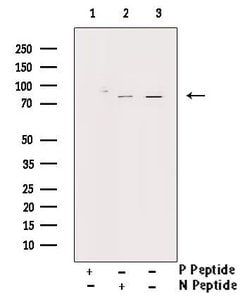
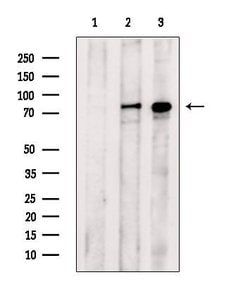
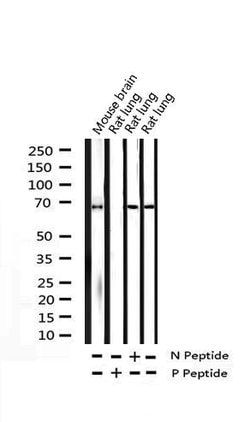
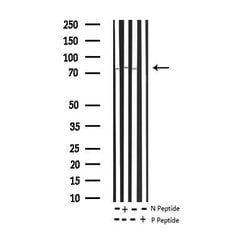
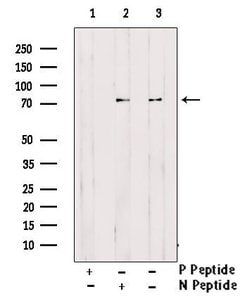
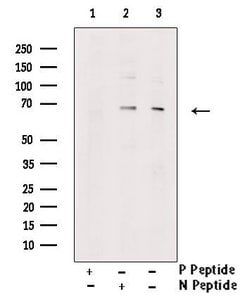
- Antibody detects endogenous levels of PKC zeta only when phosphorylated at Threonine 410
- The PKC family of serine/threonine kinases, including PRKCZ (PKC zeta), is activated intracellularly by signal transduction pathways
- In humans, at least 12 different PKC polypeptides have been identified
- These isoforms differ in primary structure, tissue distribution, subcellular localization, mode of action in vitro, response to extracellular signals, and substrate specificity
- PKC alpha, beta I, beta II and gamma form the conventional family; their activities are Ca2+- and phospholipid-dependent
- PKC zeta plays a key regulatory role in a variety of cellular functions including cell growth and differentiation, gene expression, hormone secretion and membrane function.