Phospho-HDAC2 (Ser394) Polyclonal Antibody, Invitrogen™
Manufacturer: Thermo Scientific
Select a Size
| Pack Size | SKU | Availability | Price |
|---|---|---|---|
| Each of 1 | PIPA5105021-Each-of-1 | In Stock | ₹ 46,502.50 |
PIPA5105021 - Each of 1
In Stock
Quantity
1
Base Price: ₹ 46,502.50
GST (18%): ₹ 8,370.45
Total Price: ₹ 54,872.95
Antigen
Phospho-HDAC2 (Ser394)
Classification
Polyclonal
Conjugate
Unconjugated
Gene
HDAC2
Gene Alias
D10Wsu179e; HD2; hdac 2; Hdac2; hdac-2; Histone deacetylase 2; histone deacetylase 2-like protein; histone deacetylase-2; I79_010219; mRPD3; RPD3; transcriptional regulator homolog RPD3; YAF1; YY1 transcription factor-binding protein; YY1-associated factor 1; Yy1bp
Host Species
Rabbit
Purification Method
sequential chromatography
Regulatory Status
RUO
Gene ID (Entrez)
15182, 3066, 84577
Content And Storage
-20°C
Form
Liquid
Applications
Immunocytochemistry, Western Blot
Concentration
1 mg/mL
Formulation
PBS with 50% glycerol and 0.02% sodium azide; pH 7.4
Gene Accession No.
P70288, Q92769
Gene Symbols
HDAC2
Immunogen
A synthesized peptide derived from human HDAC2(Accession Q92769), corresponding to amino acid residues around phosphorylated Ser394.
Quantity
100 μL
Primary or Secondary
Primary
Target Species
Human, Mouse, Rat
Product Type
Antibody
Isotype
IgG
Related Products
Description
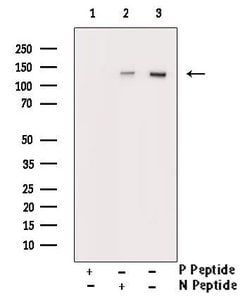
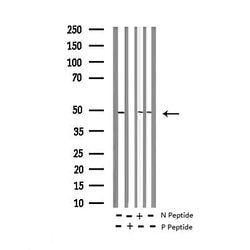
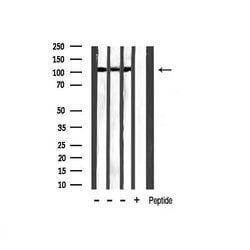
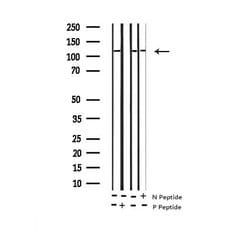
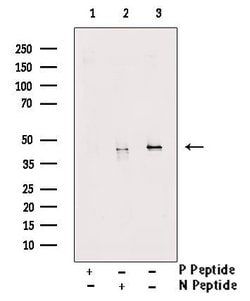
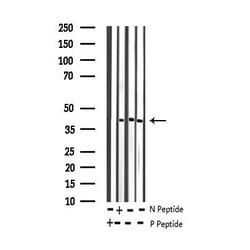
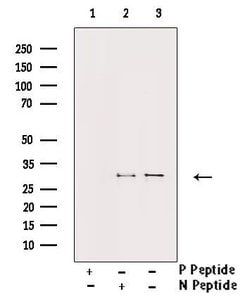
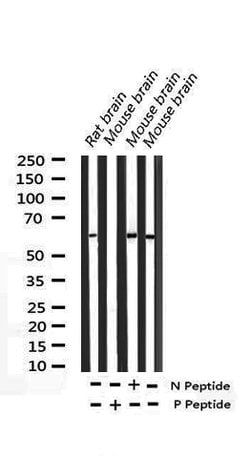
- Antibody detects endogenous levels of HDAC2 only when phosphorylated at Serine 394
- HDAC2 belongs to the histone deacetylase family
- Histone deacetylases act via the formation of large multiprotein complexes and are responsible for the deacetylation of lysine residues at the N-terminal regions of core histones (H2A, H2B, H3 and H4)
- This protein forms transcriptional repressor complexes by associating with many different proteins, including YY1, a mammalian zinc-finger transcription factor
- Thus, it plays an important role in transcriptional regulation, cell cycle progression and developmental events
- Alternative splicing results in multiple transcript variants.