PIPA5105031
Phospho-HDAC8 (Ser39) Polyclonal Antibody, Invitrogen™
Manufacturer: Thermo Scientific
Select a Size
| Pack Size | SKU | Availability | Price |
|---|---|---|---|
| Each of 1 | PIPA5105031-Each-of-1 | In Stock | ₹ 46,502.50 |
PIPA5105031 - Each of 1
In Stock
Quantity
1
Base Price: ₹ 46,502.50
GST (18%): ₹ 8,370.45
Total Price: ₹ 54,872.95
Antigen
Phospho-HDAC8 (Ser39)
Classification
Polyclonal
Conjugate
Unconjugated
Gene
HDAC8
Gene Alias
2610007D20Rik; CDA07; CDLS5; HD8; Hdac8; HDACL1; histone deacetylase 8; histone deacetylase-like 1; MRXS6; RGD1562895; RPD3; WTS
Host Species
Rabbit
Purification Method
sequential chromatography
Regulatory Status
RUO
Gene ID (Entrez)
363481, 55869, 70315
Content And Storage
-20°C
Form
Liquid
Applications
Immunocytochemistry, Immunohistochemistry (Paraffin), Western Blot
Concentration
1 mg/mL
Formulation
PBS with 50% glycerol and 0.02% sodium azide; pH 7.4
Gene Accession No.
B1WC68, Q8VH37, Q9BY41
Gene Symbols
HDAC8
Immunogen
A synthesized peptide derived from human HDAC8(Accession Q9BY41), corresponding to amino acid residues around phosphorylated Ser39.
Quantity
100 μL
Primary or Secondary
Primary
Target Species
Human, Mouse, Rat
Product Type
Antibody
Isotype
IgG
Related Products
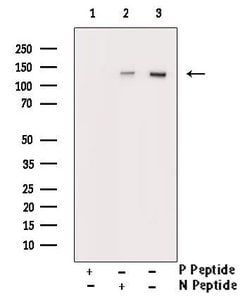
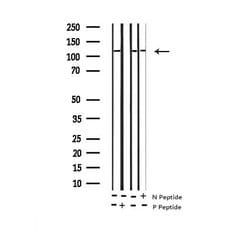
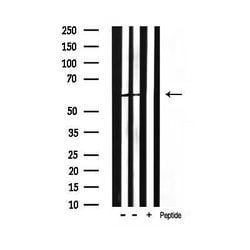
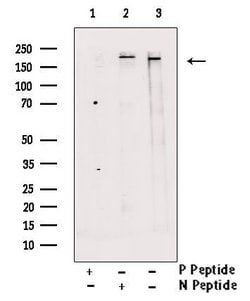
Description
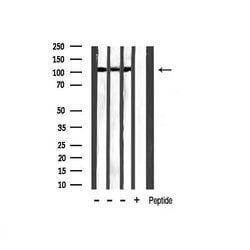
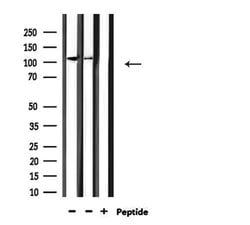
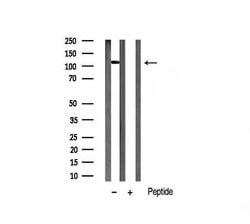
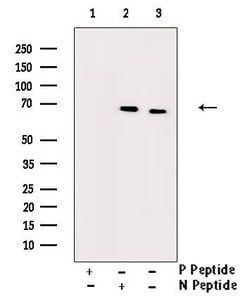
- Antibody detects endogenous levels of HDAC8 only when phosphorylated at Serine 39
- In the intact cell, DNA closely associates with histones and other nuclear proteins to form chromatin
- The remodeling of chromatin is believed to be a critical component of transcriptional regulation and a major source of this remodeling is brought about by the acetylation of nucleosomal histones
- Acetylation of lysine residues in the amino terminal tail domain of histone results in an allosteric change in the nucleosomal conformation and an increased accessibility to transcription factors by DNA
- Conversely, the deacetylation of histones is associated with transcriptional silencing
- Several mammalian proteins have been identified as nuclear histone acetylases, including GCN5, PCAF (p300/CBP-associated factor), p300/CBP, HAT1 and the TFIID subunit TAF II p250
- Mammalian HDAC8, isolated from human kidney, is a histone deacetylase that shares homology to other HDACs but has different tissue distribution
- HDAC8 is localized to the nucleus and plays a role in the development of a broad range of tissues and in the etiology of cancer.