Phospho-Cyclin H (Thr315) Polyclonal Antibody, Invitrogen™
Manufacturer: Thermo Scientific
Select a Size
| Pack Size | SKU | Availability | Price |
|---|---|---|---|
| Each of 1 | PIPA5105284-Each-of-1 | In Stock | ₹ 46,502.50 |
PIPA5105284 - Each of 1
In Stock
Quantity
1
Base Price: ₹ 46,502.50
GST (18%): ₹ 8,370.45
Total Price: ₹ 54,872.95
Antigen
Phospho-Cyclin H (Thr315)
Classification
Polyclonal
Conjugate
Unconjugated
Gene
CCNH
Gene Alias
6330408H09Rik; AI661354; AV102684; AW538719; CAK; CAK complex subunit; Ccnh; CDK-activating kinase complex subunit; CycH; cyclin H; cyclin-dependent kinase-activating kinase complex subunit; cyclin-H; MO15-associated protein; OTTHUMP00000222395; OTTHUMP00000222396; p34; p37
Host Species
Rabbit
Purification Method
sequential chromatography
Regulatory Status
RUO
Gene ID (Entrez)
66671, 902
Content And Storage
-20°C
Form
Liquid
Applications
Immunocytochemistry, Immunohistochemistry (Paraffin), Western Blot
Concentration
1 mg/mL
Formulation
PBS with 50% glycerol and 0.02% sodium azide; pH 7.4
Gene Accession No.
P51946, Q61458
Gene Symbols
CCNH
Immunogen
A synthesized peptide derived from human CCNH(Accession P51946), corresponding to amino acid residues around phosphorylated Thr315.
Quantity
100 μL
Primary or Secondary
Primary
Target Species
Human, Mouse
Product Type
Antibody
Isotype
IgG
Related Products
Description
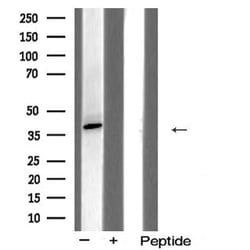
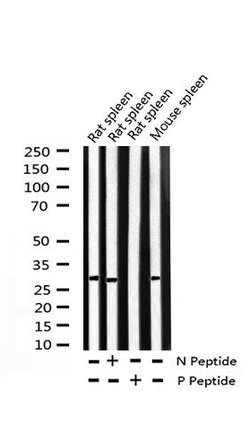
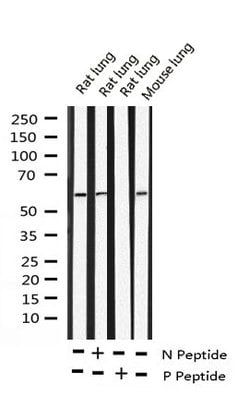
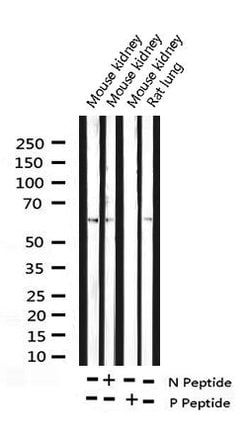
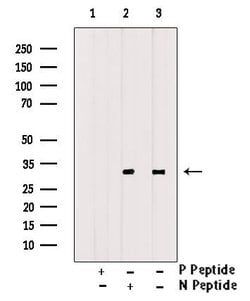
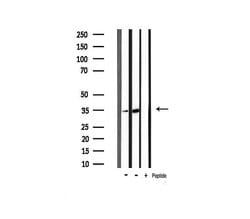
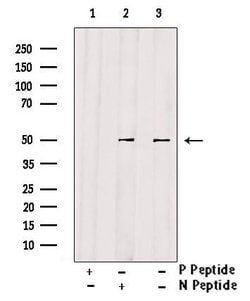
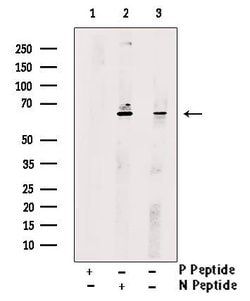
- Antibody detects endogenous levels of Cyclin H only when phosphorylated at Thr315
- The protein encoded by this gene belongs to the highly conserved cyclin family, whose members are characterized by a dramatic periodicity in protein abundance through the cell cycle
- Cyclins function as regulators of CDK kinases
- Different cyclins exhibit distinct expression and degradation patterns which contribute to the temporal coordination of each mitotic event
- This cyclin forms a complex with CDK7 kinase and ring finger protein MAT1
- The kinase complex is able to phosphorylate CDK2 and CDC2 kinases, thus functions as a CDK-activating kinase (CAK)
- This cyclin and its kinase partner are components of TFIIH, as well as RNA polymerase II protein complexes
- They participate in two different transcriptional regulation processes, suggesting an important link between basal transcription control and the cell cycle machinery.