Phospho-ARHGAP42 (Tyr376) Polyclonal Antibody, Invitrogen™
Manufacturer: Thermo Scientific
Select a Size
| Pack Size | SKU | Availability | Price |
|---|---|---|---|
| Each of 1 | PIPA5105369-Each-of-1 | In Stock | ₹ 46,502.50 |
PIPA5105369 - Each of 1
In Stock
Quantity
1
Base Price: ₹ 46,502.50
GST (18%): ₹ 8,370.45
Total Price: ₹ 54,872.95
Antigen
Phospho-ARHGAP42 (Tyr376)
Classification
Polyclonal
Conjugate
Unconjugated
Gene
ARHGAP42
Gene Alias
9030420J04Rik; Arhgap42; BE136619; Graf3; RGD1564081; Rho GTPase activating protein 42; Rho GTPase-activating protein 10-like; Rho GTPase-activating protein 42; rho-type GTPase-activating protein 42; TMEM133; VRho GTPase activating protein 42
Host Species
Rabbit
Purification Method
sequential chromatography
Regulatory Status
RUO
Gene ID (Entrez)
143872, 71544
Content And Storage
-20°C
Form
Liquid
Applications
Western Blot
Concentration
1 mg/mL
Formulation
PBS with 50% glycerol and 0.02% sodium azide; pH 7.4
Gene Accession No.
A6NI28, B2RQE8
Gene Symbols
ARHGAP42
Immunogen
A synthesized peptide derived from human ARHGAP42(Accession A6NI28), corresponding to amino acid residues around phosphorylated Tyr376.
Quantity
100 μL
Primary or Secondary
Primary
Target Species
Human, Mouse
Product Type
Antibody
Isotype
IgG
Related Products
Description
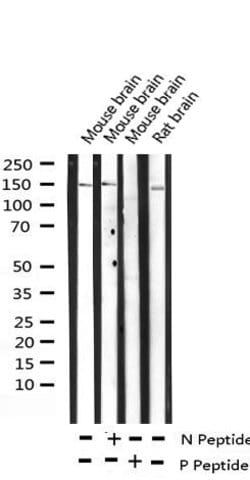
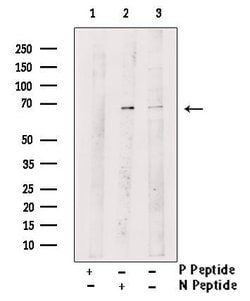
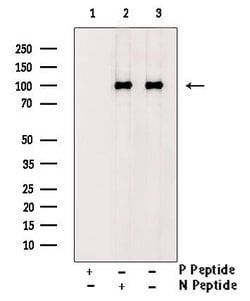
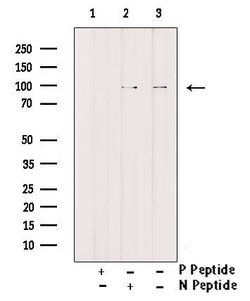
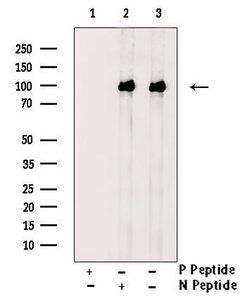
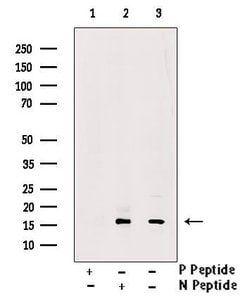
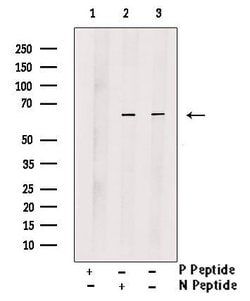
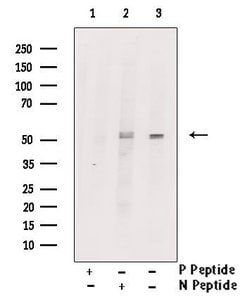
- Antibody detects endogenous levels of ARHGAP42 only when phosphorylated at Tyr376
- This gene encodes a Rho GTPase-activating protein (RhoGAP), and member of the GRAF or BAR-PH family of proteins
- Expression of this gene is enriched in vascular smooth muscle cells and the encoded protein inhibits RhoA activity to regulate vascular tone and control blood pressure
- A mutation in the first intron of this gene modulates its expression and is associated with reduced blood pressure in human patients with borderline hypertension.