PIPA5107001
Myotrophin Polyclonal Antibody, Invitrogen™
Manufacturer: Thermo Scientific
Select a Size
| Pack Size | SKU | Availability | Price |
|---|---|---|---|
| Each of 1 | PIPA5107001-Each-of-1 | In Stock | ₹ 49,528.50 |
PIPA5107001 - Each of 1
In Stock
Quantity
1
Base Price: ₹ 49,528.50
GST (18%): ₹ 8,915.13
Total Price: ₹ 58,443.63
Antigen
Myotrophin
Classification
Polyclonal
Conjugate
Unconjugated
Gene
MTPN
Gene Alias
5033418D15Rik; GCDP; Granule cell differentiation protein; growth factor; Mtpn; Myotrophin; protein V-1; stimulates myocyte growth; V1; V-1; V-1 protein
Host Species
Rabbit
Purification Method
Affinity Chromatography
Regulatory Status
RUO
Gene ID (Entrez)
136319
Content And Storage
Store at 4°C short term. For long term storage, store at -20°C, avoiding freeze/thaw cycles.
Form
Liquid
Applications
Western Blot
Concentration
0.5 mg/mL
Formulation
PBS with 2% sucrose and 0.09% sodium azide; pH 7.4
Gene Accession No.
P58546
Gene Symbols
MTPN
Immunogen
Synthetic peptide located within the following region: GRKPLHYAAD CGQLEILEFL LLKGADINAP DKHHITPLLS AVYEGHVSCV
Quantity
100 μL
Primary or Secondary
Primary
Target Species
Human
Product Type
Antibody
Isotype
IgG
Related Products

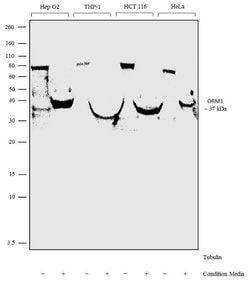

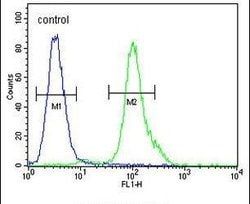
Description
- Sequence homology: Cow: 100%; Dog: 100%; Guinea Pig: 100%; Horse: 100%; Human: 100%; Mouse: 100%; Rabbit: 100%; Rat: 100%; Zebrafish: 86% The transcript produced from this gene is bi-cistronic and can encode both myotrophin and leucine zipper protein 6
- The myotrophin protein is associated with cardiac hypertrophy, where it is involved in the conversion of NFkappa B p50-p65 heterodimers to p50-p50 and p65-p65 homodimers
- This protein also has a potential function in cerebellar morphogenesis, and it may be involved in the differentiation of cerebellar neurons, particularly of granule cells
- A cryptic ORF at the 3' end of this transcript uses a novel internal ribosome entry site and a non-AUG translation initiation codon to produce leucine zipper protein 6, a 6
- 4 kDa tumor antigen that is associated with myeloproliferative disease.