PIPA5110759
Bmf Polyclonal Antibody, Invitrogen™
Manufacturer: Thermo Scientific
Select a Size
| Pack Size | SKU | Availability | Price |
|---|---|---|---|
| Each of 1 | PIPA5110759-Each-of-1 | In Stock | ₹ 48,905.50 |
PIPA5110759 - Each of 1
In Stock
Quantity
1
Base Price: ₹ 48,905.50
GST (18%): ₹ 8,802.99
Total Price: ₹ 57,708.49
Antigen
Bmf
Classification
Polyclonal
Formulation
PBS with 40% glycerol and 0.02% sodium azide; pH 7.2
Gene Accession No.
Q96LC9
Gene Symbols
BMF
Immunogen
Recombinant Protein corresonding to Human Bmf
Quantity
100 μL
Primary or Secondary
Primary
Target Species
Human
Product Type
Antibody
Isotype
IgG
Applications
Immunocytochemistry, Immunohistochemistry, Western Blot
Conjugate
Unconjugated
Gene
BMF
Gene Alias
AW260063; AW411872; Bcl2 modifying factor; Bcl-2 modifying factor; bcl-2-modifying factor; Bmf; FLJ00065
Host Species
Rabbit
Purification Method
Antigen affinity chromatography
Regulatory Status
RUO
Gene ID (Entrez)
90427
Content And Storage
Store at 4°C short term. For long term storage, store at -20°C, avoiding freeze/thaw cycles.
Form
Liquid
Related Products

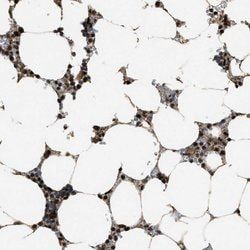

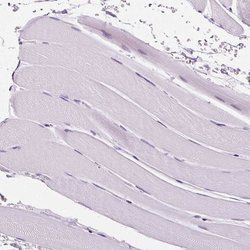

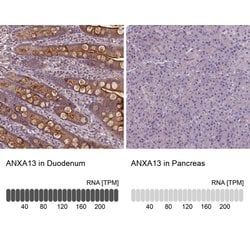

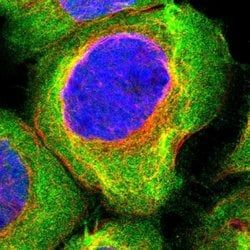
Description
- Immunogen sequence: VEELEDDVFQ PEDGEPVTQP GSLLSADLFA QSLLDCPLSR LQLFPLTHCC GPGLRPTSQE DKATQTLSPA SPSQGVMLPC GVTEEPQRLF YGNAGYRLPL PASFPAVLPI GEQPPEGQWQ HQAEVQIARK LQCIADQFHR LHVQQHQQNQ The protein encoded by this gene belongs to the BCL2 protein family
- BCL2 family members form hetero- or homodimers and act as anti- or pro-apoptotic regulators that are involved in a wide variety of cellular activities
- This protein contains a single BCL2 homology domain 3 (BH3), and has been shown to bind BCL2 proteins and function as an apoptotic activator
- This protein is found to be sequestered to myosin V motors by its association with dynein light chain 2, which may be important for sensing intracellular damage and triggering apoptosis
- Alternatively spliced transcript variants encoding different isoforms have been identified.