ING3 Polyclonal Antibody, Invitrogen™
Manufacturer: Thermo Scientific
Select a Size
| Pack Size | SKU | Availability | Price |
|---|---|---|---|
| Each of 1 | PIPA5111622-Each-of-1 | In Stock | ₹ 48,905.50 |
PIPA5111622 - Each of 1
In Stock
Quantity
1
Base Price: ₹ 48,905.50
GST (18%): ₹ 8,802.99
Total Price: ₹ 57,708.49
Antigen
ING3
Classification
Polyclonal
Formulation
PBS with 40% glycerol and 0.02% sodium azide; pH 7.2
Gene Accession No.
Q9NXR8
Gene Symbols
ING3
Immunogen
Recombinant Protein corresonding to Human ING3
Quantity
100 μL
Primary or Secondary
Primary
Target Species
Human
Product Type
Antibody
Isotype
IgG
Applications
Immunohistochemistry
Conjugate
Unconjugated
Gene
ING3
Gene Alias
1300013A07Rik; Eaf 4; Eaf4; FLJ20089; HSPC301; ING 2; ING 3; ING2; ING3; ing3 protein; inhibitor of growth family member 3; inhibitor of growth family, member 3; inhibitor of growth protein 3; inhibitor of growth protein 3-like protein; MEAF4; p47 p47 ING3; p47 regulator protein; p47ING3; p47ING3 protein; zgc:56327
Host Species
Rabbit
Purification Method
Antigen affinity chromatography
Regulatory Status
RUO
Gene ID (Entrez)
54556
Content And Storage
Store at 4°C short term. For long term storage, store at -20°C, avoiding freeze/thaw cycles.
Form
Liquid
Related Products
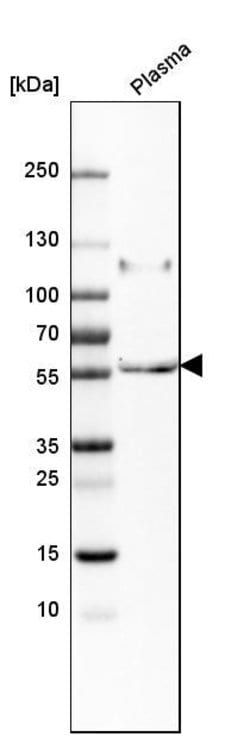
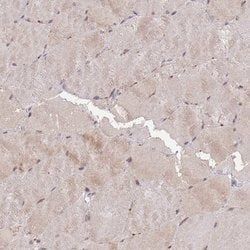
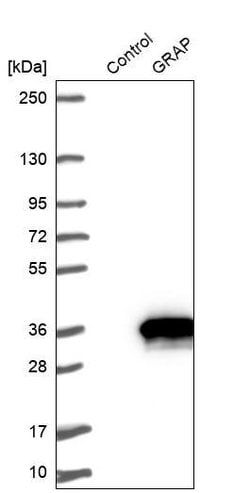

Description
- Immunogen sequence: KLDQELAKFK MELEADNAGI TEILERRSLE LDTPSQPVNN HHAHSHTPVE KRKYNPTSHH TTTDHIPEKK FKSEALLSTL T The protein encoded by this gene is similar to ING1, a tumor suppressor protein that can interact with TP53, inhibit cell growth, and induce apoptosis
- This protein contains a PHD-finger, which is a common motif in proteins involved in chromatin remodeling
- This gene can activate p53 trans-activated promoters, including promoters of p21/waf1 and bax
- Overexpression of this gene has been shown to inhibit cell growth and induce apoptosis
- Allelic loss and reduced expression of this gene were detected in head and neck cancers
- Two alternatively spliced transcript variants encoding different isoforms have been observed.