PIPA5112062
CD1c Polyclonal Antibody, Invitrogen™
Manufacturer: Thermo Scientific
Select a Size
| Pack Size | SKU | Availability | Price |
|---|---|---|---|
| Each of 1 | PIPA5112062-Each-of-1 | In Stock | ₹ 43,120.50 |
PIPA5112062 - Each of 1
In Stock
Quantity
1
Base Price: ₹ 43,120.50
GST (18%): ₹ 7,761.69
Total Price: ₹ 50,882.19
Antigen
CD1c
Classification
Polyclonal
Formulation
PBS with no preservative
Gene Accession No.
P29017
Gene Symbols
CD1C
Immunogen
A synthetic peptide corresponding to the N-terminus of the human CD1C
Quantity
100 μL
Primary or Secondary
Primary
Target Species
Human
Product Type
Antibody
Isotype
IgG
Applications
Western Blot
Conjugate
Unconjugated
Gene
CD1C
Gene Alias
BDCA1; canCD1c; CD1; CD1A; CD1C; CD1C antigen, c polypeptide; CD1c molecule; cortical thymocyte antigen CD1C; differentiation antigen CD1-alpha-3; R7; RP11-101J8.3; T-cell surface glycoprotein CD1c
Host Species
Rabbit
Purification Method
Antigen affinity chromatography, Protein A
Regulatory Status
RUO
Gene ID (Entrez)
911
Content And Storage
Store at 4°C short term. For long term storage, store at -20°C, avoiding freeze/thaw cycles.
Form
Liquid
Related Products
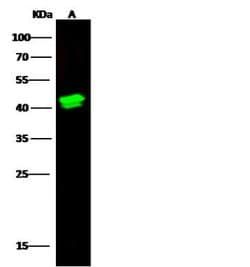
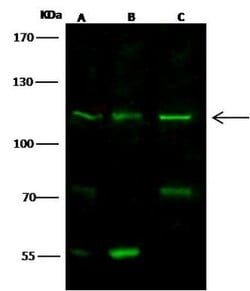
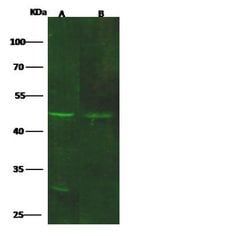
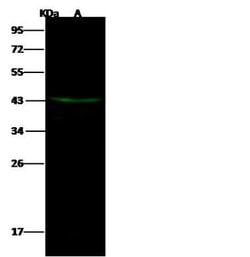
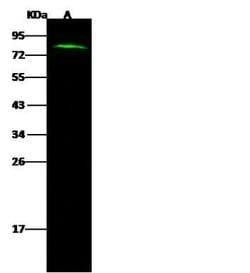
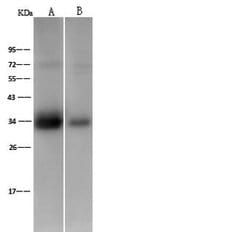

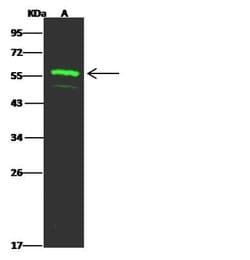
Description
- Description This gene encodes a member of the CD1 family of transmembrane glycoproteins, which are structurally related to the major histocompatibility complex (MHC) proteins and form heterodimers with beta-2-microglobulin
- The CD1 proteins mediate the presentation of primarily lipid and glycolipid antigens of self or microbial origin to T cells
- The human genome contains five CD1 family genes organized in a cluster on chromosome 1
- The CD1 family members are thought to differ in their cellular localization and specificity for particular lipid ligands
- The protein encoded by this gene localizes to late endosomes and lysosomes via a tyrosine-based motif in the cytoplasmic tail, and requires vesicular acidification to bind lipid antigens.