ABCF2 Polyclonal Antibody, Invitrogen™
Manufacturer: Thermo Scientific
Select a Size
| Pack Size | SKU | Availability | Price |
|---|---|---|---|
| Each of 1 | PIPA5112081-Each-of-1 | In Stock | ₹ 43,120.50 |
PIPA5112081 - Each of 1
In Stock
Quantity
1
Base Price: ₹ 43,120.50
GST (18%): ₹ 7,761.69
Total Price: ₹ 50,882.19
Antigen
ABCF2
Classification
Polyclonal
Formulation
PBS with no preservative
Gene Accession No.
Q9UG63
Gene Symbols
Abcf2
Immunogen
A synthetic peptide corresponding to the N-terminus of the Human ABCF2
Quantity
100 μL
Primary or Secondary
Primary
Target Species
Human
Product Type
Antibody
Isotype
IgG
Applications
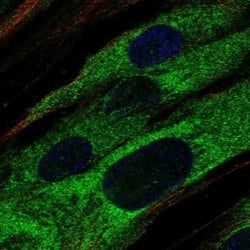
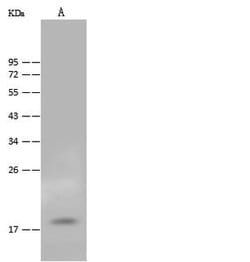
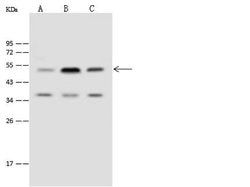
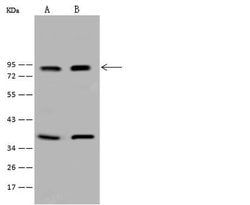
Immunocytochemistry, Immunoprecipitation, Western Blot
Conjugate
Unconjugated
Gene
Abcf2
Gene Alias
0710005O05Rik; ABC28; Abcf2; ABC-type transport protein; ATP binding cassette subfamily F member 2; ATP-binding cassette sub-family F member 2; ATP-binding cassette, subfamily F (GCN20), member 2; ATP-binding cassette, sub-family F (GCN20), member 2; developmentally regulated repeat element-containing transcript 3; DKFZp586K1823; Drr3; E430001O06; EST133090; HUSSY18; HUSSY-18; Iron-inhibited ABC transporter 2; M-ABC1
Host Species
Rabbit
Purification Method
Antigen affinity chromatography, Protein A
Regulatory Status
RUO
Gene ID (Entrez)
10061
Content And Storage
Store at 4°C short term. For long term storage, store at -20°C, avoiding freeze/thaw cycles.
Form
Liquid
Related Products

Description
- This antibody reacts with: Human, Mouse (Species predicted to react based on 100% sequence homology)
- OCIAD1 was identified via immunoscreening of an ovarian carcinoma cDNA library from ovarian cancer patients and is expressed in multiple tissues including ovary, placenta, brain, testis, prostate, and mammary gland
- Two isoforms of OCIAD1 are known to exist; the shorter isoform is restricted to the central nervous system
- OCIAD1 is a transmembrane protein whose overexpression in HEY ovarian cancer cells increased lysophosphatidic acid- (LPA-)induced, but not basal level cell adhesion to extracellular matrix proteins collagen I and laminin10/11
- This adhesion is not blocked by LY294002 and GF109203X, suggesting that OCIAD1 does not use protein kinase C and PI3 kinase signaling pathways to exert its effect on adhesion.