COTL1 Polyclonal Antibody, Invitrogen™
Manufacturer: Thermo Scientific
Select a Size
| Pack Size | SKU | Availability | Price |
|---|---|---|---|
| Each of 1 | PIPA5112930-Each-of-1 | In Stock | ₹ 43,120.50 |
PIPA5112930 - Each of 1
In Stock
Quantity
1
Base Price: ₹ 43,120.50
GST (18%): ₹ 7,761.69
Total Price: ₹ 50,882.19
Antigen
COTL1
Classification
Polyclonal
Conjugate
Unconjugated
Gene
Cotl1
Gene Alias
1810074P22Rik; 2010004C08Rik; CLP; coactosin like F-actin binding protein 1; coactosin-like 1; coactosin-like 1 (Dictyostelium); coactosin-like F-actin binding protein 1; coactosin-like protein; coactosin-like protein {ECO:0000250; Cotl1; cotl1 {ECO:0000312; EMBL:AAI58747.1, ECO:0000312; FLJ43657; MGC137989 protein; MGC19733; RGD:1305498}; UniProtKB:Q14019}; Unknown (protein for MGC:63983); wu:fb08h08; zgc:63983
Host Species
Rabbit
Purification Method
Antigen affinity chromatography
Regulatory Status
RUO
Gene ID (Entrez)
23406, 72042
Content And Storage
-20°C or -80°C if preferred
Form
Liquid
Applications
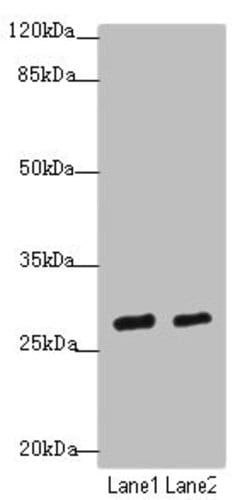
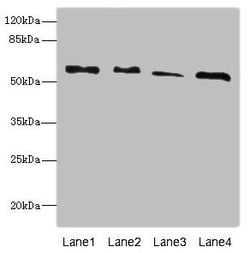
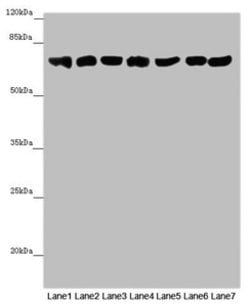
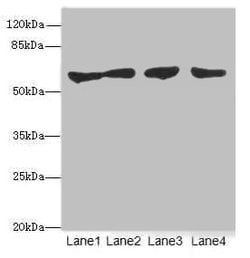
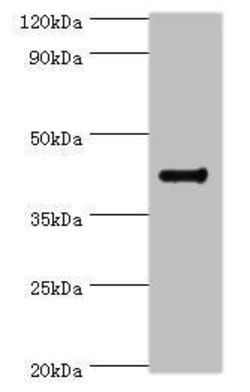
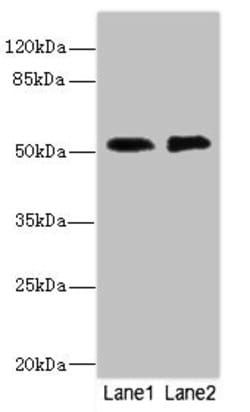
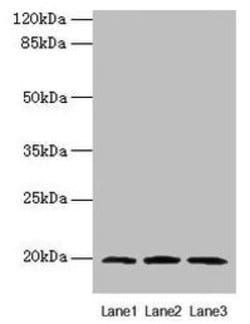
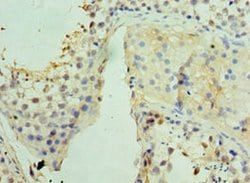
ELISA, Immunohistochemistry (Paraffin), Western Blot
Concentration
0.52 mg/mL
Formulation
PBS with 50% glycerol and 0.02% sodium azide; pH 7.3
Gene Accession No.
Q14019, Q9CQI6
Gene Symbols
Cotl1
Immunogen
Recombinant Human Coactosin-like protein (1-142AA)
Quantity
100 μL
Primary or Secondary
Primary
Target Species
Human, Mouse
Product Type
Antibody
Isotype
IgG
Related Products
Description
- This gene encodes one of the numerous actin-binding proteins which regulate the actin cytoskeleton
- This protein binds F-actin, and also interacts with 5-lipoxygenase, which is the first committed enzyme in leukotriene biosynthesis
- Although this gene has been reported to map to chromosome 17 in the Smith-Magenis syndrome region, the best alignments for this gene are to chromosome 16
- The Smith-Magenis syndrome region is the site of two related pseudogenes.