RGS20 Polyclonal Antibody, Invitrogen™
Manufacturer: Thermo Scientific
Select a Size
| Pack Size | SKU | Availability | Price |
|---|---|---|---|
| Each of 1 | PIPA5112691-Each-of-1 | In Stock | ₹ 42,497.50 |
PIPA5112691 - Each of 1
In Stock
Quantity
1
Base Price: ₹ 42,497.50
GST (18%): ₹ 7,649.55
Total Price: ₹ 50,147.05
Antigen
RGS20
Classification
Polyclonal
Conjugate
Unconjugated
Gene
RGS20
Gene Alias
2900073E09Rik; G(z)GAP; gz-GAP; gz-selective GTPase-activating protein; Regulator of G-protein signaling 20; regulator of G-protein signaling 20 variant 2; regulator of G-protein signaling Z1; regulator of G-protein signalling 20; regulator of Gz-selective protein signaling 1; Rgs20; Rgsz1; ZGAP1
Host Species
Rabbit
Purification Method
Antigen affinity chromatography
Regulatory Status
RUO
Gene ID (Entrez)
58175, 8601
Content And Storage
-20°C or -80°C if preferred
Form
Liquid
Applications
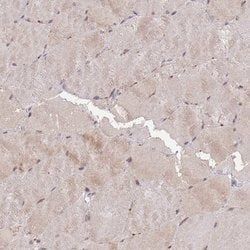
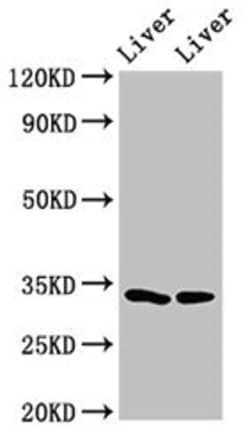
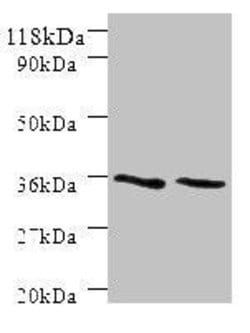
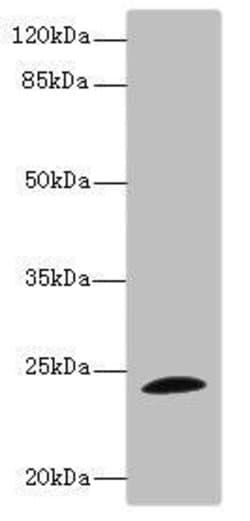
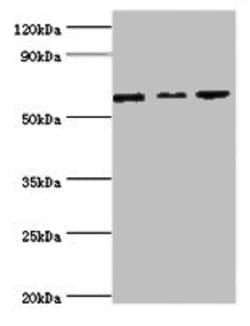
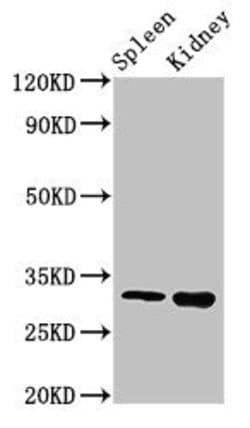
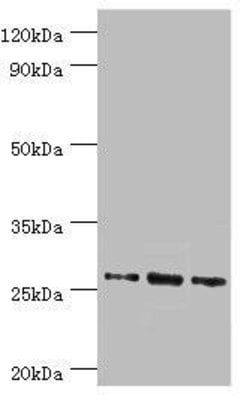
ELISA, Immunocytochemistry, Immunohistochemistry (Paraffin), Western Blot
Concentration
0.72 mg/mL
Formulation
PBS with 50% glycerol and 0.02% sodium azide; pH 7.3
Gene Accession No.
O76081, Q9QZB1
Gene Symbols
RGS20
Immunogen
Recombinant Human Regulator of G-protein signaling 20 protein (1-241AA)
Quantity
100 μL
Primary or Secondary
Primary
Target Species
Human, Mouse
Product Type
Antibody
Isotype
IgG
Related Products
Description
- Regulator of G protein signaling (RGS) proteins are regulatory and structural components of G protein-coupled receptor complexes
- RGS proteins are GTPase-activating proteins for Gi (see GNAI1; MIM 139310) and Gq (see GNAQ; MIM 600998) class G-alpha proteins
- They accelerate transit through the cycle of GTP binding and hydrolysis and thereby accelerate signaling kinetics and termination.