KCNK13 Polyclonal Antibody, Invitrogen™
Manufacturer: Thermo Scientific
Select a Size
| Pack Size | SKU | Availability | Price |
|---|---|---|---|
| Each of 1 | PIPA5113607-Each-of-1 | In Stock | ₹ 46,502.50 |
PIPA5113607 - Each of 1
In Stock
Quantity
1
Base Price: ₹ 46,502.50
GST (18%): ₹ 8,370.45
Total Price: ₹ 54,872.95
Antigen
KCNK13
Classification
Polyclonal
Conjugate
Unconjugated
Gene
KCNK13
Gene Alias
BB085247; F730021E22Rik; Gm1570; Gm1685; K2p13.1; K2P13.1 potassium channel; KCNK13; Potassium channel subfamily K member 13; potassium channel, subfamily K, member 13; potassium channel, two pore domain subfamily K, member 13; potassium two pore domain channel subfamily K member 13; prdx1; Tandem pore domain halothane-inhibited potassium channel 1; tandem pore domain potassium channel THIK-1; THIK1; THIK-1
Host Species
Rabbit
Purification Method
Affinity chromatography
Regulatory Status
RUO
Gene ID (Entrez)
56659
Content And Storage
-20° C, Avoid Freeze/Thaw Cycles
Form
Liquid
Applications
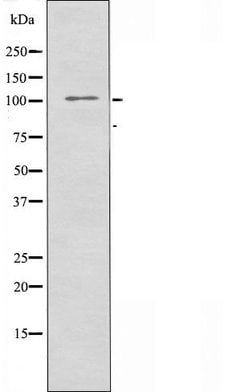
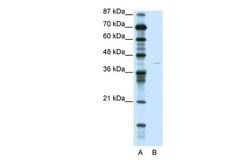
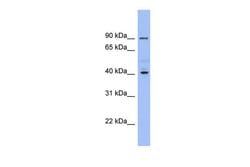
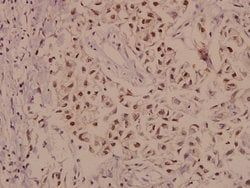
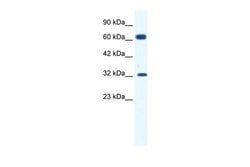
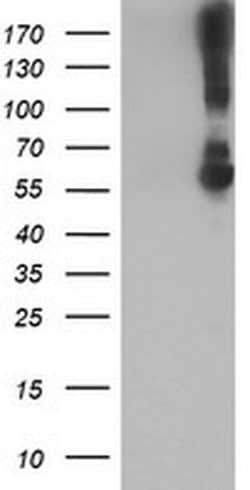
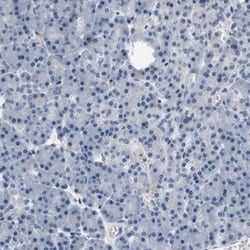
Immunocytochemistry, Immunohistochemistry (Paraffin), Western Blot
Concentration
0.5 mg/mL
Formulation
PBS with 2% sucrose and 0.09% sodium azide
Gene Accession No.
Q9HB14
Gene Symbols
KCNK13
Immunogen
Synthetic peptide directed towards the C terminal region of human KCNK13
Quantity
100 μL
Primary or Secondary
Primary
Target Species
Human
Product Type
Antibody
Isotype
IgG
Related Products

Description
- Immunogen sequence: GEMISMKDLL AANKASLAIL QKQLSEMANG CPHQTSTLAR DNEFSGGVGA For short term use, store at 2-8°C up to 1 week
- For long term storage, store at -20°C in small aliquots to prevent freeze-thaw cycles
- Predicted homology: Horse: 79%; Human: 100%; Pig: 79%; Rat: 79% Potassium channels represent the most complex class of voltage-gated ion channels from both functional and structural standpoints
- Their diverse functions include regulating neurotransmitter release, heart rate, insulin secretion, neuronal excitability, epithelial electrolyte transport, smooth muscle contraction, and cell volume
- This gene encodes a potassium channel containing two pore-forming domains
- This protein is an open channel that can be stimulated by arachidonic acid and inhibited by the anesthetic halothane.