PIPA5113962
SPON2 Polyclonal Antibody, Invitrogen™
Manufacturer: Thermo Scientific
Select a Size
| Pack Size | SKU | Availability | Price |
|---|---|---|---|
| Each of 1 | PIPA5113962-Each-of-1 | In Stock | ₹ 46,502.50 |
PIPA5113962 - Each of 1
In Stock
Quantity
1
Base Price: ₹ 46,502.50
GST (18%): ₹ 8,370.45
Total Price: ₹ 54,872.95
Antigen
SPON2
Classification
Polyclonal
Conjugate
Unconjugated
Gene
SPON2
Gene Alias
2310045I24Rik; AI504350; differentially expressed in cancerous and non-cancerous lung cells 1; DIL1; DIL-1; DKFZp686G21139; FLJ16313; FLJ22401; FLJ34460; F-spondin; MINDIN; Mspondin; M-SPONDIN; SPON2; spondin 2; spondin 2, extracellular matrix protein; spondin-2; UNQ435/PRO866
Host Species
Rabbit
Purification Method
Affinity chromatography
Regulatory Status
RUO
Gene ID (Entrez)
10417
Content And Storage
-20° C, Avoid Freeze/Thaw Cycles
Form
Liquid
Applications
Western Blot
Concentration
0.5 mg/mL
Formulation
PBS with 2% sucrose and 0.09% sodium azide
Gene Accession No.
Q9BUD6
Gene Symbols
SPON2
Immunogen
Synthetic peptide directed towards the N terminal region of human SPON2
Quantity
100 μL
Primary or Secondary
Primary
Target Species
Human
Product Type
Antibody
Isotype
IgG
Related Products

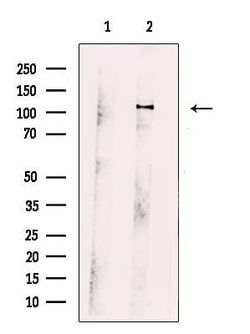
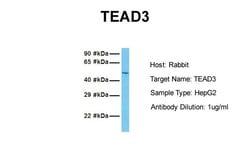
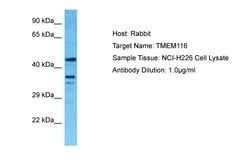
Description
- Immunogen sequence: CSARAPAKYS ITFTGKWSQT AFPKQYPLFR PPAQWSSLLG AAHSSDYSMW For short term use, store at 2-8°C up to 1 week
- For long term storage, store at -20°C in small aliquots to prevent freeze-thaw cycles
- Predicted homology: Cow: 100%; Guinea Pig: 100%; Horse: 100%; Human: 100%; Mouse: 100%; Rat: 100%; Zebrafish: 100% Cell adhesion protein that promotes adhesion and outgrowth of hippocampal embryonic neurons
- Binds directly to bacteria and their components and functions as an opsonin for macrophage phagocytosis of bacteria
- Essential in the initiation of the innate immune response and represents a unique pattern-recognition molecule in the ECM for microbial pathogens
- Binds bacterial lipopolysaccharide (LPS).