PIPA5106320
SYNPO2 Polyclonal Antibody, Invitrogen™
Manufacturer: Thermo Scientific
Select a Size
| Pack Size | SKU | Availability | Price |
|---|---|---|---|
| Each of 1 | PIPA5106320-Each-of-1 | In Stock | ₹ 48,193.50 |
PIPA5106320 - Each of 1
In Stock
Quantity
1
Base Price: ₹ 48,193.50
GST (18%): ₹ 8,674.83
Total Price: ₹ 56,868.33
Antigen
SYNPO2
Classification
Polyclonal
Conjugate
Unconjugated
Gene
SYNPO2
Gene Alias
1110069I04Rik; 2310068J10Rik; 9530006G20Rik; AI848603; genethonin 2; Genethonin-2; Myo; Myopodin; mypodin; RGD1564779; synaptopodin 2; synaptopodin-2; Synpo2
Host Species
Rabbit
Purification Method
Affinity chromatography
Regulatory Status
RUO
Gene ID (Entrez)
118449, 171024, 499702
Content And Storage
-20°C
Form
Liquid
Applications
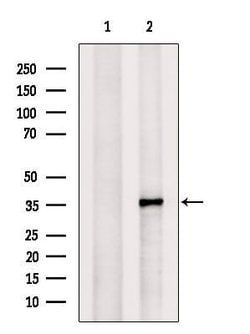
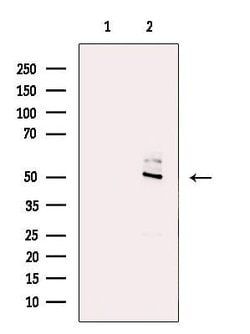
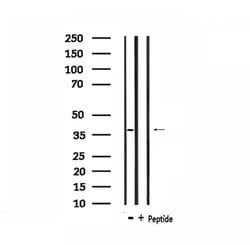
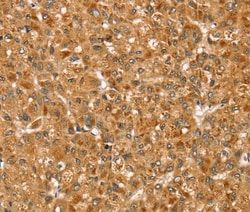
Immunohistochemistry (Paraffin), Western Blot
Concentration
1 mg/mL
Formulation
PBS with 50% glycerol and 0.02% sodium azide; pH 7.4
Gene Accession No.
D4A702, Q91YE8, Q9UMS6
Gene Symbols
SYNPO2
Immunogen
A synthesized peptide derived from human SYNPO2(Accession Q9UMS6), corresponding to amino acid residues T626-V676.
Quantity
100 μL
Primary or Secondary
Primary
Target Species
Human, Mouse, Rat
Product Type
Antibody
Isotype
IgG
Related Products
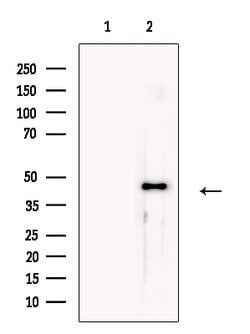
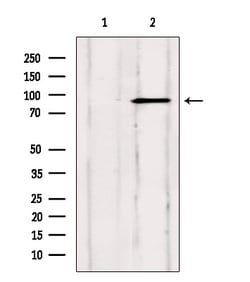
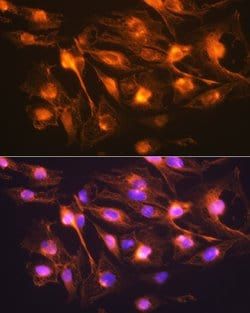
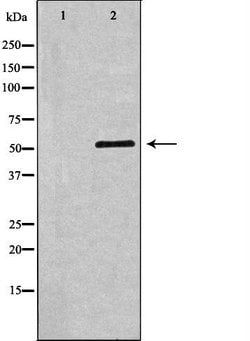
Description
- Antibody detects endogenous levels of total Synaptopodin
- SYNPO2 was initially identified as myopodin, a member of the synaptopodin family that contains one PPXY motif and multiple PXXP motifs
- It colocalizes with alpha-actinin and is found at the Z-disc and during stress conditions will translocate to the nucleus, suggesting that it is part of signaling pathways in addition to its function as a structural protein
- SYNPO2 has been shown to bind to calmodulin, alpha-actinin, and smooth muscle myosin and will stimulate actin polymerization in a calmodulin dependent manner, consistent with its proposed role in organizing the cytoskeleton
- While deletion of SYNPO2 has been reported to be highly correlated with the invasiveness of prostate cancers, other reports suggest that down-regulation of SYNPO2 reduces the invasiveness and motility of prostate cancer cells.