Apelin Receptor Polyclonal Antibody, Invitrogen™
Manufacturer: Thermo Scientific
Select a Size
| Pack Size | SKU | Availability | Price |
|---|---|---|---|
| Each of 1 | PIPA5114153-Each-of-1 | In Stock | ₹ 46,502.50 |
PIPA5114153 - Each of 1
In Stock
Quantity
1
Base Price: ₹ 46,502.50
GST (18%): ₹ 8,370.45
Total Price: ₹ 54,872.95
Antigen
Apelin Receptor
Classification
Polyclonal
Conjugate
Unconjugated
Gene
Aplnr
Gene Alias
AGTRL1; angiotensin II receptor-like 1; angiotensin receptor-like 1; Apelin receptor; APJ; APJ (apelin) receptor; APJ receptor; APJR; Aplnr; B78; G protein-coupled receptor APJ; GPCR34; G-protein coupled receptor APJ; G-protein coupled receptor HG11; HG11; HG11 orphan receptor; MSR; msr/apj
Host Species
Rabbit
Purification Method
Affinity chromatography
Regulatory Status
RUO
Gene ID (Entrez)
23796
Content And Storage
-20° C, Avoid Freeze/Thaw Cycles
Form
Liquid
Applications
Western Blot
Concentration
0.5 mg/mL
Formulation
PBS with 2% sucrose and 0.09% sodium azide
Gene Accession No.
Q9WV08
Gene Symbols
Aplnr
Immunogen
Immunogen sequence: CCDQSGCKGT PHSSSAEKSA SYSSGHSQGP GPNMGKGGEQ MHEKSIPYSQ
Quantity
100 μL
Primary or Secondary
Primary
Target Species
Mouse
Product Type
Antibody
Isotype
IgG
Related Products
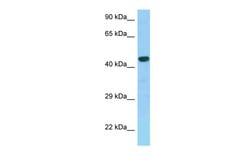
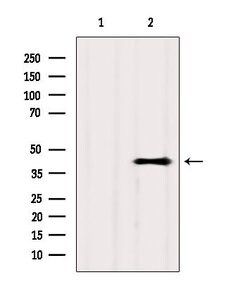
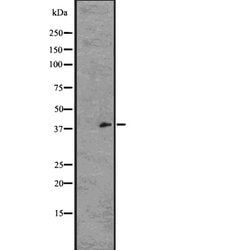
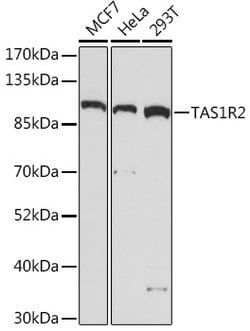
Description
- Immunogen sequence: CCDQSGCKGT PHSSSAEKSA SYSSGHSQGP GPNMGKGGEQ MHEKSIPYSQ For short term use, store at 2-8°C up to 1 week
- For long term storage, store at -20°C in small aliquots to prevent freeze-thaw cycles
- Predicted homology: Dog: 86%; Horse: 93%; Human: 100%; Mouse: 100%; Rabbit: 86%; Rat: 86% APLNR (Apelin Receptor) is a member of the G protein-coupled receptor gene family
- The encoded protein is related to the angiotensin receptor, but is actually an apelin receptor that inhibits adenylate cyclase activity and plays a counter-regulatory role against the pressure action of angiotensin II by exerting hypertensive effect
- It functions in the cardiovascular and central nervous systems, in glucose metabolism, in embryonic and tumor angiogenesis and as a human immunodeficiency virus (HIV-1) coreceptor
- Two transcript variants resulting from alternative splicing have been identified.