PIPA5114360
SLFN12 Polyclonal Antibody, Invitrogen™
Manufacturer: Thermo Scientific
Select a Size
| Pack Size | SKU | Availability | Price |
|---|---|---|---|
| Each of 1 | PIPA5114360-Each-of-1 | In Stock | ₹ 46,502.50 |
PIPA5114360 - Each of 1
In Stock
Quantity
1
Base Price: ₹ 46,502.50
GST (18%): ₹ 8,370.45
Total Price: ₹ 54,872.95
Antigen
SLFN12
Classification
Polyclonal
Conjugate
Unconjugated
Gene
SLFN12
Gene Alias
Schlafen family member 12; SLFN12; SLFN3
Host Species
Rabbit
Purification Method
Protein A
Regulatory Status
RUO
Gene ID (Entrez)
55106
Content And Storage
Store at 4°C short term. For long term storage, store at -20°C, avoiding freeze/thaw cycles.
Form
Liquid
Applications
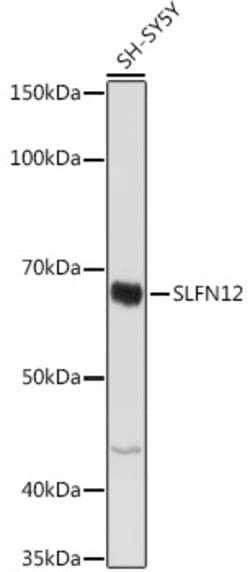
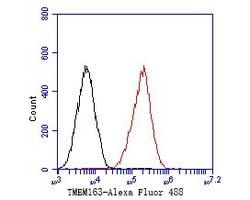
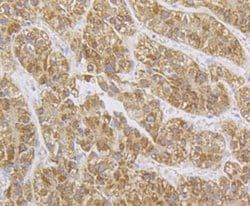
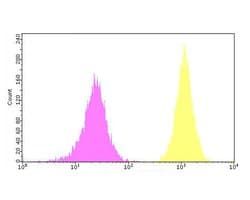
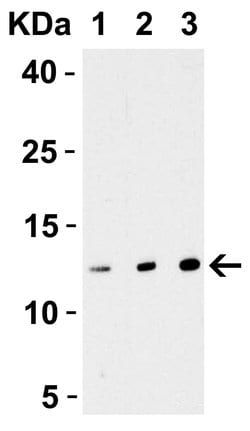
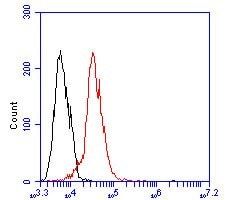
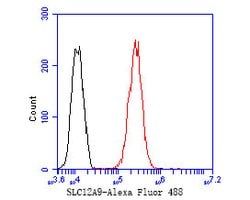
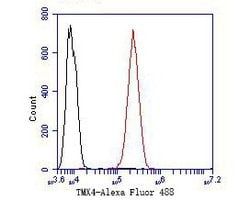
Flow Cytometry, Immunohistochemistry (Paraffin), Western Blot
Concentration
1 mg/mL
Formulation
PBS with 0.2% BSA, 50% glycerol and 0.05% sodium azide; pH 7.4
Gene Accession No.
Q8IYM2
Gene Symbols
SLFN12
Immunogen
Synthetic peptide within Human SLFN12 aa 529-578
Quantity
100 μL
Primary or Secondary
Primary
Target Species
Human
Product Type
Antibody
Isotype
IgG
Related Products
Description
- Despite being first described several years ago, the roles of the Schlafen (SLFN) family of proteins remain largely unknown
- The SLFN genes are preferentially expressed in lymphoid tissues and differentially regulated during thymocyte maturation
- It is thought that many play roles in cell growth, hemopoietic cell differentiation, and T cell development and maturation
- Most members contain at least one divergent AAA domain (AAA_4) that may play a role in ATP binding
- Although also known as SLFN3, a Schlafen family member that may be a marker of T cell activation, human SLFN12 has relatively low homology to SLFN3 in other species
- Loss of the SLFN12 gene due to deletion is associated with Kabuki syndrome, a multiple congenital anomaly syndrome, suggesting SLFN may play a role in this genetic condition.