SPATA13 Polyclonal Antibody, Invitrogen™
Manufacturer: Thermo Scientific
Select a Size
| Pack Size | SKU | Availability | Price |
|---|---|---|---|
| Each of 1 | PIPA5114343-Each-of-1 | In Stock | ₹ 46,502.50 |
PIPA5114343 - Each of 1
In Stock
Quantity
1
Base Price: ₹ 46,502.50
GST (18%): ₹ 8,370.45
Total Price: ₹ 54,872.95
Antigen
SPATA13
Classification
Polyclonal
Conjugate
Unconjugated
Gene
Spata13
Gene Alias
adenomatous polyposis coli stimulated exchange factor 2; APC-stimulated guanine nucleotide exchange factor 2; ARHGEF29; ASEF2; C79050; ESTM11; mFLJ00298; Spata13; spermatogenesis associated 13; spermatogenesis-associated protein 13; spt13; X83327
Host Species
Rabbit
Purification Method
Protein A
Regulatory Status
RUO
Gene ID (Entrez)
219140, 221178, 305938
Content And Storage
Store at 4°C short term. For long term storage, store at -20°C, avoiding freeze/thaw cycles.
Form
Liquid
Applications
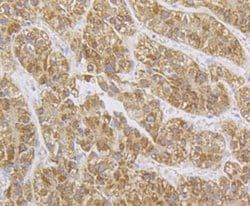
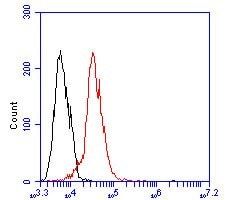
Flow Cytometry, Immunohistochemistry (Paraffin), Western Blot
Concentration
1 mg/mL
Formulation
PBS with 0.2% BSA, 50% glycerol and 0.05% sodium azide; pH 7.4
Gene Accession No.
Q5DU57, Q96N96
Gene Symbols
Spata13
Immunogen
Recombinant protein within Human SPATA13 aa 423-572
Quantity
100 μL
Primary or Secondary
Primary
Target Species
Human, Mouse, Rat
Product Type
Antibody
Isotype
IgG
Related Products

Description
- Acts as guanine nucleotide exchange factor (GEF) for RHOA, RAC1 and CDC42 GTPases
- Regulates cell migration and adhesion assembly and disassembly through a RAC1, PI3K, RHOA and AKT1-dependent mechanism
- Increases both RAC1 and CDC42 activity, but decreases the amount of active RHOA
- Required for MMP9 up-regulation via the JNK signaling pathway in colorectal tumor cells
- Involved in tumor angiogenesis and may play a role in intestinal adenoma formation and tumor progression
- [UniProt]