Phospho-Huntingtin (Ser419) Polyclonal Antibody, Invitrogen™
Manufacturer: Thermo Scientific
Select a Size
| Pack Size | SKU | Availability | Price |
|---|---|---|---|
| Each of 1 | PIPA5114585-Each-of-1 | In Stock | ₹ 46,502.50 |
PIPA5114585 - Each of 1
In Stock
Quantity
1
Base Price: ₹ 46,502.50
GST (18%): ₹ 8,370.45
Total Price: ₹ 54,872.95
Antigen
Phospho-Huntingtin (Ser419)
Classification
Polyclonal
Conjugate
Unconjugated
Gene
Htt
Gene Alias
AI256365; C430023I11Rik; Hd; HD protein; HD protein homolog; Hdh; HTT; Huntingtin; huntingtin (Huntington disease); Huntingtin, myristoylated N-terminal fragment; Huntington disease gene homolog; huntington disease protein; huntington disease protein homolog; IT15; solute carrier family 6 (neurotransmitter transporter, serotonin), member 4
Host Species
Rabbit
Purification Method
sequential chromatography
Regulatory Status
RUO
Gene ID (Entrez)
15194, 29424, 3064
Content And Storage
-20°C
Form
Liquid
Applications
Immunohistochemistry (Paraffin), Western Blot
Concentration
1 mg/mL
Formulation
PBS with 50% glycerol and 0.02% sodium azide
Gene Accession No.
P42858, P42859, P51111
Gene Symbols
Htt
Immunogen
A synthesized peptide derived from human HTT(Accession P42858), corresponding to amino acid residues around phosphorylated Ser419.
Quantity
100 μL
Primary or Secondary
Primary
Target Species
Human, Mouse, Rat
Product Type
Antibody
Isotype
IgG
Related Products
Description
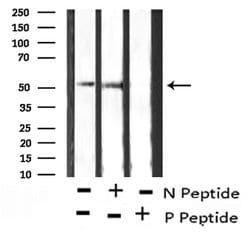
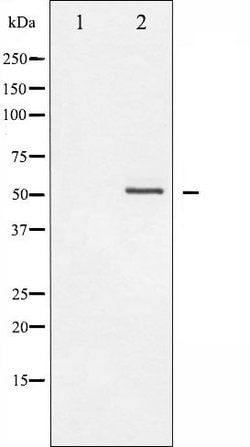
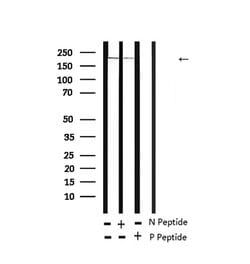
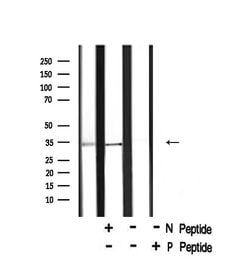
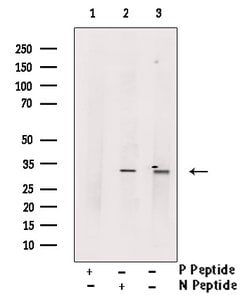
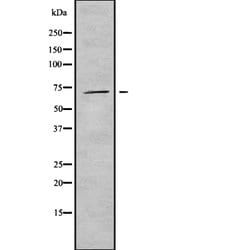
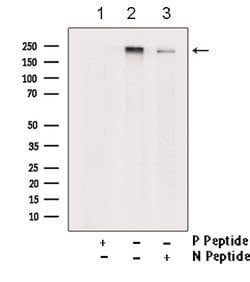
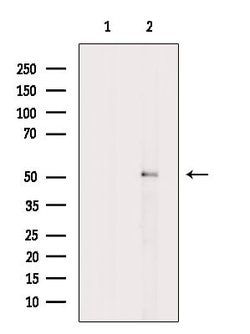
- Antibody detects endogenous levels of Huntingtin only when phosphorylated at Ser419, which site historically referenced as Ser421
- Huntingtin is a disease gene linked to Huntington's disease (HD), a neurodegenerative disorder characterized by loss of striatal neurons
- This is thought to be caused by an expanded, unstable trinucleotide repeat in the huntingtin gene, which translates as a polyglutamine repeat in the protein product
- HD is a mid-life onset autosomal dominant neurodegenerative disease that is characterized by psychiatric disorders, dementia, and involuntary movements (chorea), leading to death in 10-20 years.The huntingtin locus is large, spanning 180 kb and consisting of 67 exons
- The huntingtin gene is widely expressed and is required for normal development
- It is expressed as 2 alternatively polyadenylated forms displaying different relative abundance in various fetal and adult tissues
- The larger transcript is approximately 13.7 kb and is expressed predominantly in adult and fetal brain whereas the smaller transcript of approximately 10.3 kb is more widely expressed
- The genetic defect leading to Huntington's disease may not necessarily eliminate transcription, but may confer a new property on the mRNA or alter the function of the protein.