Phospho-Paxillin (Ser272) Polyclonal Antibody, Invitrogen™
Manufacturer: Thermo Scientific
Select a Size
| Pack Size | SKU | Availability | Price |
|---|---|---|---|
| Each of 1 | PIPA5114617-Each-of-1 | In Stock | ₹ 45,434.50 |
PIPA5114617 - Each of 1
In Stock
Quantity
1
Base Price: ₹ 45,434.50
GST (18%): ₹ 8,178.21
Total Price: ₹ 53,612.71
Antigen
Phospho-Paxillin (Ser272)
Classification
Polyclonal
Conjugate
Unconjugated
Gene
PXN
Gene Alias
adaptor protein; AW108311; AW123232; FLJ16691; hCG_1778014; I79_001229; myocardial ischemic preconditioning associated protein 7; Pax; PAX-1; PAXI; Paxillin; paxillin a; paxillin alpha; pxn; pxna; testicular tissue protein Li 134; TGFB1I1; transforming growth factor beta 1 induced transcript 1; wu:fw71f12
Host Species
Rabbit
Purification Method
sequential chromatography
Regulatory Status
RUO
Gene ID (Entrez)
19303, 360820, 5829
Content And Storage
-20°C
Form
Liquid
Applications
Immunohistochemistry (Paraffin), Western Blot
Concentration
1 mg/mL
Formulation
PBS with 50% glycerol and 0.02% sodium azide
Gene Accession No.
P49023, Q66H76, Q8VI36
Gene Symbols
PXN
Immunogen
A synthesized peptide derived from human Paxillin around the phosphorylation site of Ser272.
Quantity
100 μL
Primary or Secondary
Primary
Target Species
Human, Mouse, Rat
Product Type
Antibody
Isotype
IgG
Related Products
Description
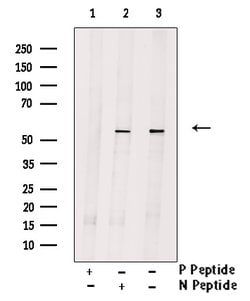
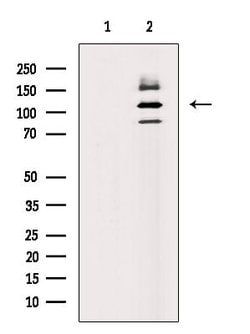
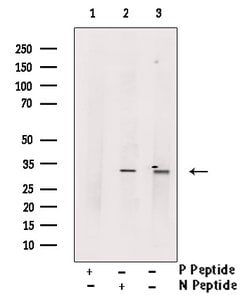
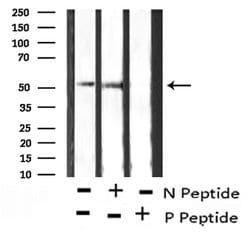
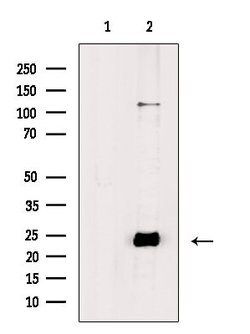
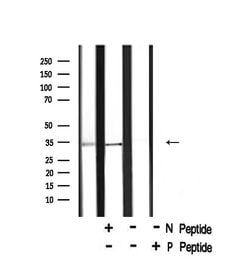
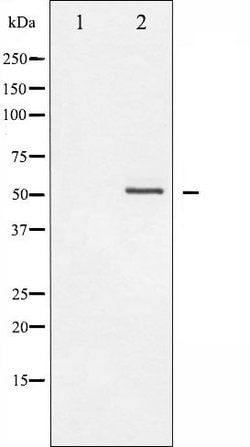
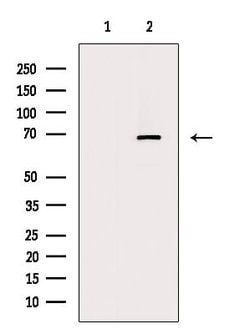
- Antibody detects endogenous levels of Paxillin only when phosphorylated at Ser272
- Paxillin is a focal adhesion protein and a substrate for several tyrosine kinases such as src, FAK, and p210BRC/ABL
- The tyrosine phosphorylation of paxillin is affected by conditions that change cell-cell adhesion
- Paxillin associates tightly with FAK and Crk through its SH2 domain
- This interaction is independent of the extracellular matrix
- Although paxillin was initially discovered in fibroblasts, its phosphorylation may also be important during neurite extension during differentiation.