PIPA5114640
Phospho-SGK2 (Thr253) Polyclonal Antibody, Invitrogen™
Manufacturer: Thermo Scientific
Select a Size
| Pack Size | SKU | Availability | Price |
|---|---|---|---|
| Each of 1 | PIPA5114640-Each-of-1 | In Stock | ₹ 46,858.50 |
PIPA5114640 - Each of 1
In Stock
Quantity
1
Base Price: ₹ 46,858.50
GST (18%): ₹ 8,434.53
Total Price: ₹ 55,293.03
Antigen
Phospho-SGK2 (Thr253)
Classification
Polyclonal
Conjugate
Unconjugated
Gene
SGK2
Gene Alias
AI098171; AW146006; dJ138B7.2; H-SGK2; Serine/threonine-protein kinase Sgk2; serum/glucocorticoid regulated kinase 2; serum/glucocorticoid-regulated kinase 2; Sgk2; SGK2, serine/threonine kinase 2; Sgkl
Host Species
Rabbit
Purification Method
sequential chromatography
Regulatory Status
RUO
Gene ID (Entrez)
10110, 171497
Content And Storage
-20°C
Form
Liquid
Applications
Immunohistochemistry (Paraffin), Western Blot
Concentration
1 mg/mL
Formulation
PBS with 50% glycerol and 0.02% sodium azide
Gene Accession No.
Q8R4U9, Q9HBY8
Gene Symbols
SGK2
Immunogen
A synthesized peptide derived from human SGK2 around the phosphorylation site of Thr253.
Quantity
100 μL
Primary or Secondary
Primary
Target Species
Human, Rat
Product Type
Antibody
Isotype
IgG
Related Products
Description
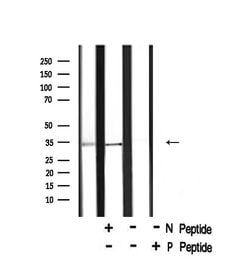
- Antibody detects endogenous levels of SGK2 only when phosphorylated at Thr253
- SGK2 is a serine/threonine protein kinase which is similar to serum- and glucocorticoid-induced protein kinase (SGK)
- Unlike SGK, SGK2 is not induced by serum or glucocorticoids
- It is induced in response to signals that activate phosphatidylinositol 3-kinase, which is also true for SGK
- Although little is known about the transcriptional regulation of SGK2, the protein has been shown to be phosphorylated and activated by 3 phosphoinositide dependent protein kinase 1 (PDK1), and to a lesser extent insulin like growth factor 1, in vitro.