PPP4C Polyclonal Antibody, Invitrogen™
Manufacturer: Thermo Scientific
Select a Size
| Pack Size | SKU | Availability | Price |
|---|---|---|---|
| Each of 1 | PIPA5115790-Each-of-1 | In Stock | ₹ 46,502.50 |
PIPA5115790 - Each of 1
In Stock
Quantity
1
Base Price: ₹ 46,502.50
GST (18%): ₹ 8,370.45
Total Price: ₹ 54,872.95
Antigen
PPP4C
Classification
Polyclonal
Conjugate
Unconjugated
Gene
PPP4C
Gene Alias
1110002D08Rik; AU016079; P PPX; pp4; PP4C; PPH3; Ppp4; PPP4C; PPX; PP-X; protein phosphatase 4 (formerly X), catalytic subunit; protein phosphatase 4 catalytic subunit; protein phosphatase 4, catalytic subunit; protein phosphatase X; protein phosphatase X, catalytic subunit; serine/threonine-protein phosphatase 4 catalytic subunit
Host Species
Rabbit
Purification Method
Affinity chromatography
Regulatory Status
RUO
Gene ID (Entrez)
171366, 5531, 56420
Content And Storage
-20°C
Form
Liquid
Applications
Immunohistochemistry (Paraffin), Western Blot
Concentration
1 mg/mL
Formulation
PBS with 50% glycerol and 0.02% sodium azide
Gene Accession No.
P60510, P97470, Q5BJ92
Gene Symbols
PPP4C
Immunogen
A synthesized peptide derived from human PPP4C(Accession P60510), corresponding to amino acid residues A270-L307.
Quantity
100 μL
Primary or Secondary
Primary
Target Species
Human, Mouse, Rat
Product Type
Antibody
Isotype
IgG
Related Products


Description
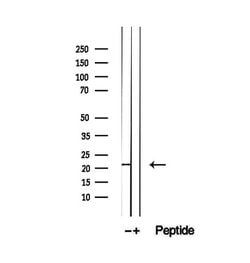
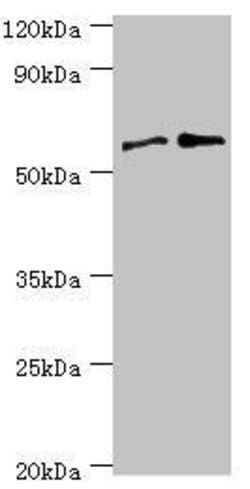
- Antibody detects endogenous levels of total PPP4C
- The protein encoded by this gene is one subunit of a trimeric complex, forming a highly conserved transcription factor that binds to CCAAT motifs in the promoter regions in a variety of genes
- Subunit A associates with a tight dimer composed of the B and C subunits, resulting in a trimer that binds to DNA with high specificity and affinity
- The sequence specific interactions of the complex are made by the A subunit, suggesting a role as the regulatory subunit
- In addition, there is evidence of post-transcriptional regulation in this gene product, either by protein degradation or control of translation
- Further regulation is represented by alternative splicing in the glutamine-rich activation domain, with clear tissue-specific preferences for the two isoforms.