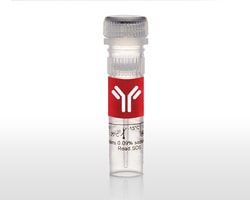
EPS8L2 Polyclonal Antibody, Invitrogen™
Manufacturer: Thermo Scientific
Select a Size
| Pack Size | SKU | Availability | Price |
|---|---|---|---|
| Each of 1 | PIPA5117939-Each-of-1 | In Stock | ₹ 39,427.00 |
PIPA5117939 - Each of 1
In Stock
Quantity
1
Base Price: ₹ 39,427.00
GST (18%): ₹ 7,096.86
Total Price: ₹ 46,523.86
Antigen
EPS8L2
Classification
Polyclonal
Formulation
PBS with 0.03% ProClin 300; pH 7
Gene Accession No.
Q9H6S3
Gene Symbols
EPS8L2
Immunogen
E. coli-derived Human EPS8L2 fragment
Quantity
100 μL
Primary or Secondary
Primary
Target Species
Human
Form
Liquid
Applications
Immunohistochemistry (Paraffin), Immunoprecipitation, Western Blot
Conjugate
Unconjugated
Gene
EPS8L2
Gene Alias
AI042819; AW545405; Epidermal growth factor receptor kinase substrate 8-like protein 2; epidermal growth factor receptor pathway substrate 8-like protein 2; epidermal growth factor receptor pathway substrate 8-related protein 2; EPS8 like 2; EPS8 related protein 2; Eps8l2; EPS8-like 2; EPS8-like protein 2; EPS8R2; EPS8-related protein 2; PP13181
Host Species
Rabbit
Purification Method
Antigen affinity chromatography, Protein A
Regulatory Status
RUO
Gene ID (Entrez)
64787
Content And Storage
-20° C, Avoid Freeze/Thaw Cycles
Isotype
IgG
Related Products


Description
- The protein encoded by this gene has been shown to be involved in the regulation of cell proliferation, and in the crosstalk between the adiponectin signalling and insulin signalling pathways
- The encoded protein binds many other proteins, including RAB5A, DCC, AKT2, PIK3CA, adiponectin receptors, and proteins of the NuRD/MeCP1 complex
- This protein is found associated with endosomal membranes, but can be released by EGF and translocated to the nucleus.