MBD4 Polyclonal Antibody, Invitrogen™
Manufacturer: Thermo Scientific
Select a Size
| Pack Size | SKU | Availability | Price |
|---|---|---|---|
| Each of 1 | PIPA5118051-Each-of-1 | In Stock | ₹ 39,427.00 |
PIPA5118051 - Each of 1
In Stock
Quantity
1
Base Price: ₹ 39,427.00
GST (18%): ₹ 7,096.86
Total Price: ₹ 46,523.86
Antigen
MBD4
Classification
Polyclonal
Formulation
PBS with no preservative
Gene Accession No.
O95243
Gene Symbols
MBD4
Immunogen
A synthetic peptide corresponding to the center region of the Human MBD4
Quantity
100 μL
Primary or Secondary
Primary
Target Species
Human
Form
Liquid
Applications
Immunoprecipitation, Western Blot
Conjugate
Unconjugated
Gene
MBD4
Gene Alias
3,N(4)-ethenocytosine glycosylase; G/5-fluorouracil mismatch glycosylase with biphasic kinetics; G/T mismatch glycosylase; G/U mismatch glycosylase; Mbd4; MED1; methyl-CpG binding domain 4 DNA glycosylase; methyl-CpG binding domain 4, DNA glycosylase; methyl-CpG binding domain protein 4; methyl-CpG-binding domain protein 4; Methyl-CpG-binding endonuclease 1; methyl-CpG-binding protein MBD4; Mismatch-specific DNA N-glycosylase; putative methyl-CpG binding protein
Host Species
Rabbit
Purification Method
Antigen affinity chromatography, Protein A
Regulatory Status
RUO
Gene ID (Entrez)
8930
Content And Storage
-20° C, Avoid Freeze/Thaw Cycles
Isotype
IgG
Related Products


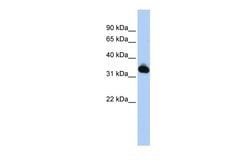
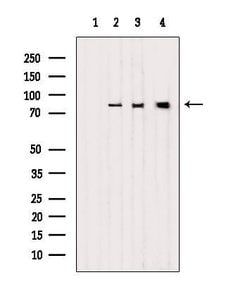
Description
- DNA methylation, or the addition of methyl groups to cytosine bases in the dinucleotide CpG, is imperative to proper development and regulates gene expression
- The methylation pattern involves the enzymatic processes of methylation and demethylation
- The demethylation enzyme was recently found to be a mammalian protein, which exhibits demethylase activity associated to a methyl-CpG-binding domain (MBD)
- The enzyme is able to revert methylated cytosine bases to cytosines within the particular dinucleotide sequence mdCpdG by catalyzing the cleaving of the methyl group as methanol
- MeCP2 and MBD1 (PCM1) are first found to repress transcription by binding specifically to methylated DNA
- MBD2 and MBD4 (also known as MED1) were later found to colocalize with foci of heavily methylated satellite DNA and believed to mediate the biological functions of the methylation signal
- Surprisingly, MBD3 does not bind methylated DNA both in vivo and in vitro
- MBD1, MBD2, MBD3, and MBD4 are found to be expressed in somatic tissues, but the expression of MBD1 and MBD2 is reduced or absent in embryonic stem cells, which are known to be deficient in MeCP1 activity
- MBD4 have homology to bacterial base excision repair DNA N-glycosylases/lyases
- In some microsatellite unstable tumors MBD4 is mutated at an exonic polynucleotide tract.