NPY Polyclonal Antibody, Invitrogen™
Manufacturer: Thermo Scientific
Select a Size
| Pack Size | SKU | Availability | Price |
|---|---|---|---|
| Each of 1 | PIPA5120859-Each-of-1 | In Stock | ₹ 44,811.50 |
PIPA5120859 - Each of 1
In Stock
Quantity
1
Base Price: ₹ 44,811.50
GST (18%): ₹ 8,066.07
Total Price: ₹ 52,877.57
Antigen
NPY
Classification
Polyclonal
Conjugate
Unconjugated
Gene
NPY
Gene Alias
0710005A05Rik; C-flanking peptide of NPY; CPON; involved in appetite regulation; LOC100912228; Neuropeptide tyrosine; Neuropeptide Y; neuropeptide Y precursor; Neuropeptide-Y; Npy; NPY02; OTTHUMP00000201947; prepro-neuropeptide Y; proneuropeptide Y; pro-neuropeptide Y; pro-neuropeptide Y-like; PYY4; RATNPY; RATNPY02
Host Species
Rabbit
Purification Method
Affinity Chromatography
Regulatory Status
RUO
Gene ID (Entrez)
100912228, 109648, 24604, 4852
Content And Storage
-20° C, Avoid Freeze/Thaw Cycles
Form
Liquid
Applications
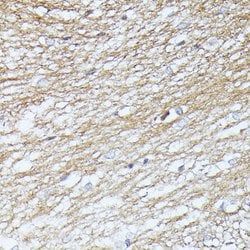
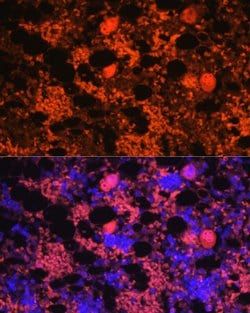
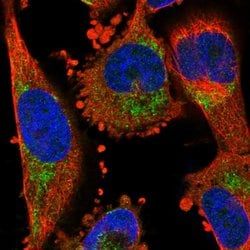
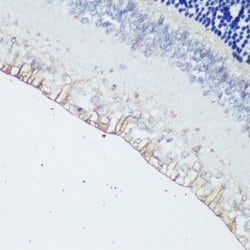
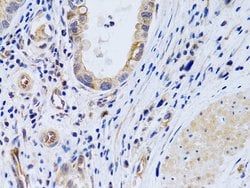
Immunocytochemistry, Immunohistochemistry (Paraffin), Western Blot
Concentration
0.38 mg/mL
Formulation
PBS with 50% glycerol and 0.01% thimerosal; pH 7.3
Gene Accession No.
P01303, P07808, P57774
Gene Symbols
NPY
Immunogen
Recombinant fusion protein containing a sequence corresponding to amino acids 29-97 of NPY (NP_000896.1).
Quantity
100 μL
Primary or Secondary
Primary
Target Species
Human, Mouse, Rat
Product Type
Antibody
Isotype
IgG
Related Products



Description
- Positive test controls include: SH-SY5Y
- The target is usually found in the following locations: Secreted
- Immunogen sequence: YPSKPDNPGE DAPAEDMARY YSALRHYINL ITRQRYGKRS SPETLISDLL MRESTENVPR TRLEDPAMW This gene encodes a neuropeptide that is widely expressed in the central nervous system and influences many physiological processes, including cortical excitability, stress response, food intake, circadian rhythms, and cardiovascular function
- The neuropeptide functions through G protein-coupled receptors to inhibit adenylyl cyclase, activate mitogen-activated protein kinase, regulate intracellular calcium levels, and activate potassium channels
- A polymorphism in this gene resulting in a change of leucine 7 to proline in the signal peptide is associated with elevated cholesterol levels, higher alcohol consumption, and may be a risk factor for various metabolic and cardiovascular diseases.