PRL3 Polyclonal Antibody, Invitrogen™
Manufacturer: Thermo Scientific
Select a Size
| Pack Size | SKU | Availability | Price |
|---|---|---|---|
| Each of 1 | PIPA5121669-Each-of-1 | In Stock | ₹ 17,346.10 |
PIPA5121669 - Each of 1
In Stock
Quantity
1
Base Price: ₹ 17,346.10
GST (18%): ₹ 3,122.298
Total Price: ₹ 20,468.398
Antigen
PRL3
Classification
Polyclonal
Conjugate
Unconjugated
Gene
Ptp4a3
Gene Alias
AV088979; HPRL-3; potentially prenylated protein tyrosine phosphatase; pPtp4a3; PRL3; Prl-3; PRL-R; protein tyrosine phosphatase 4a3; protein tyrosine phosphatase type IVA 3; protein tyrosine phosphatase type IVA, member 3; protein-tyrosine phosphatase 4a3; Protein-tyrosine phosphatase of regenerating liver 3; Ptp4a3
Host Species
Rabbit
Purification Method
Antigen affinity chromatography
Regulatory Status
RUO
Gene ID (Entrez)
11156
Content And Storage
-20°C
Form
Liquid
Applications
Immunocytochemistry, Immunohistochemistry (Paraffin), Western Blot
Concentration
1 mg/mL
Formulation
PBS with 50% glycerol and 0.05% ProClin 300
Gene Accession No.
O75365
Gene Symbols
Ptp4a3
Immunogen
Recombinant protein Tyrosine Phosphatase Type IVA 3. The antigen corresponds to amino acid range 1-170 of the target protein.
Quantity
20 μL
Primary or Secondary
Primary
Target Species
Human
Product Type
Antibody
Isotype
IgG
Related Products

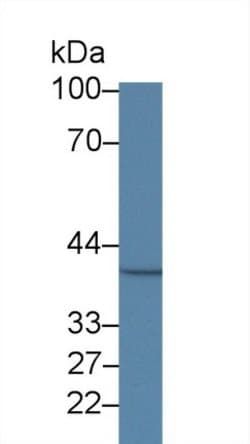
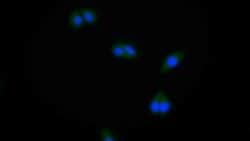
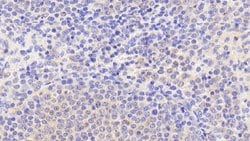
Description
- The protein encoded by this gene belongs to a small class of prenylated protein tyrosine phosphatases (PTPs)
- PTPs are cell signaling molecules that play regulatory roles in a variety of cellular processes
- This class of PTPs contain a PTP domain and a characteristic C-terminal prenylation motif
- Studies of this class of PTPs in mice demonstrated that they were prenylated proteins in vivo, which suggested their association with cell plasma membrane
- Overexpression of this gene in mammalian cells was reported to inhibit angiotensin-II induced cell calcium mobilization and promote cell growth
- Two alternatively spliced variants exist
- PRL-3 expression was found to be up-regulated in human liver carcinoma compared with normal liver
- Its expression in colorectal cancers may contribute to the establishment of liver metastasis
- In a different study, PRL-3 is found to be expressed in tumor metastasis and vasculature, regardless of the tumor source.