Calcyclin Polyclonal Antibody, Invitrogen™
Manufacturer: Thermo Scientific
Select a Size
| Pack Size | SKU | Availability | Price |
|---|---|---|---|
| Each of 1 | PIPA517001-Each-of-1 | In Stock | ₹ 46,502.50 |
PIPA517001 - Each of 1
In Stock
Quantity
1
Base Price: ₹ 46,502.50
GST (18%): ₹ 8,370.45
Total Price: ₹ 54,872.95
Antigen
Calcyclin
Classification
Polyclonal
Conjugate
Unconjugated
Gene
Cacybp
Gene Alias
2A9; 5B10; CABP; CACY; CacyBP; Calcyclin; calcyclin binding protein; calcyclin-binding protein; GIG5; growth-inhibiting gene 5 protein; hCacyBP; PNAS-107; PRA; RP1-102G20.6; S100A6; S100A6-binding protein; S100A6BP; Siah-interacting protein; Siah-interacting protein (SIP); SIP
Host Species
Rabbit
Purification Method
Antigen affinity chromatography
Regulatory Status
RUO
Gene ID (Entrez)
12301, 27101, 289144
Content And Storage
-20°C
Form
Liquid
Applications
Immunohistochemistry (Paraffin), Western Blot
Concentration
48.2 μg/mL
Formulation
0.01M HEPES with 0.15M NaCl, 100μg/mL BSA, 50% glycerol and no preservative; pH 7.5
Gene Accession No.
Q6AYK6, Q9CXW3, Q9HB71
Gene Symbols
Cacybp
Immunogen
Synthetic peptide corresponding to residues surrounding Trp162 of human CACYBP
Quantity
100 μL
Primary or Secondary
Primary
Target Species
Human, Mouse, Non-human Primate, Rat
Product Type
Antibody
Isotype
IgG
Related Products

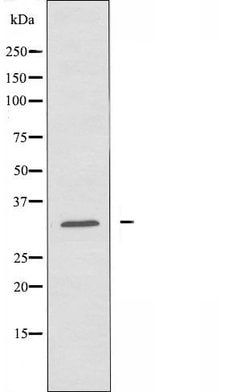
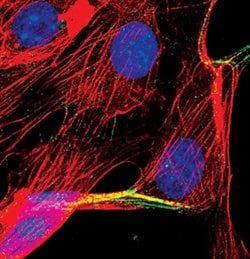
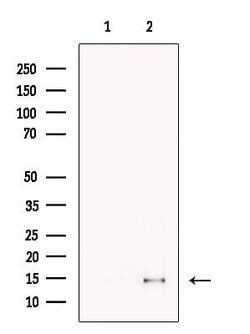
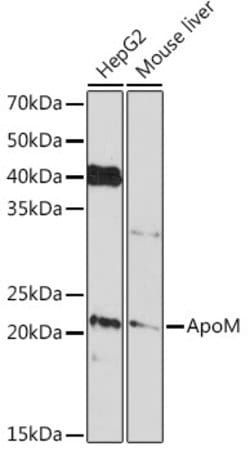
Description
- It is not recommended to aliquot this antibody
- Calcyclin is a member of the S100 family of proteins containing 2 EF-hand calcium-binding motifs
- S100 proteins are localized in the cytoplasm and/or nucleus of a wide range of cells, and involved in the regulation of a number of cellular processes such as cell cycle progression and differentiation
- S100 genes include at least 13 members which are located as a cluster on chromosome 1q21
- This protein may function in stimulation of Ca2+-dependent insulin release, stimulation of prolactin secretion, and exocytosis
- Chromosomal rearrangements and altered expression of this gene have been implicated in melanoma.