NSE Polyclonal Antibody, Invitrogen™
Manufacturer: Thermo Scientific
Select a Size
| Pack Size | SKU | Availability | Price |
|---|---|---|---|
| Each of 1 | PIPA517014-Each-of-1 | In Stock | ₹ 40,406.00 |
PIPA517014 - Each of 1
In Stock
Quantity
1
Base Price: ₹ 40,406.00
GST (18%): ₹ 7,273.08
Total Price: ₹ 47,679.08
Antigen
NSE
Classification
Polyclonal
Formulation
0.01M HEPES with 0.15M NaCl, 100μg/mL BSA, 50% glycerol and no preservative; pH 7.5
Gene Accession No.
P09104, P17183
Gene Symbols
ENO2
Immunogen
Synthetic peptide corresponding to the sequence of human enolase-2
Quantity
100 μL
Primary or Secondary
Primary
Target Species
Human, Mouse
Product Type
Antibody
Isotype
IgG
Applications
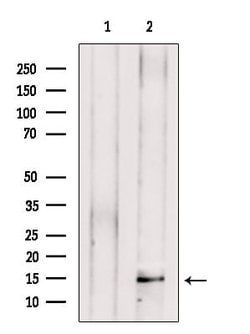
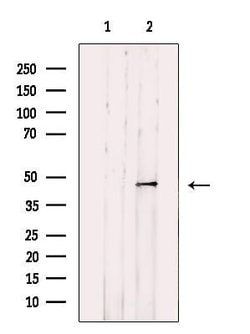
Western Blot
Conjugate
Unconjugated
Gene
ENO2
Gene Alias
2-phospho-D-glycerate hydrolyase; 2-phospho-D-glycerate hydro-lyase; AI837106; D6Ertd375e; Eno; ENO2; Eno-2; ENOG; Enolase 2; enolase 2 (gamma, neuronal); enolase 2, gamma neuronal; enolase 2, gamma, neuronal; epididymis secretory protein Li 279; gamma enolase; gamma-enolase; gamma-enolase-like; gamma-subunit of enolase; HEL-S-279; LOC100911625; Neural enolase; neuron specific enolase; neuron specific gamma enolase; Neuronal Enolase; neuronal enriched enolase; neurone-specific enolase; neuron-specific enolase; NSE; RNEN3
Host Species
Rabbit
Purification Method
Antigen affinity chromatography
Regulatory Status
RUO
Gene ID (Entrez)
13807, 2026
Content And Storage
-20°C
Form
Liquid
Related Products



Description
- It is not recommended to aliquot this antibody
- Neuron specific enolase (NSE, ENO1, ENO2, ENO3) is an enzyme that catalyzes the conversion of 2-phosphoglycerate to phosphoenolpyruvate in the glycolytic pathway, and the reverse reaction in gluconeogenesis
- NSE has a high stability in biological fluids and can easily diffuse to the extracellular medium and cerebrospinal fluid (CSF) when neuronal membranes are injured.NSE is one of three mammalian enolases, which are also known as ENO1, ENO2, and ENO3 or alternately as enolase alpha, beta and gamma
- The alpha-subunit is expressed in most tissues, the beta-subunit only in muscle, and the gamma-subunit is expressed primarily in neurons, in normal and in neoplastic neuroendocrine cells
- Co-expression of NSE and chromogranin A is common in neuroendocrine neoplasms
- Since neurons require a great deal of energy, they are very rich in glycolytic enzymes such a GAPDH and NSE
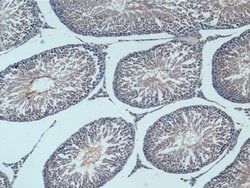
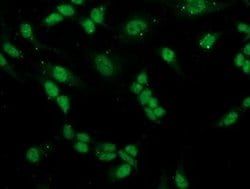
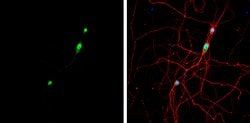
- Antibodies to NSE protein are useful to identify neuronal cell bodies, developing neuronal lineage and neuroendocrine cells
- Release of NSE from damaged neurons into CSF and blood has also been used as a biomarker of neuronal injury
- NSE is used clinically as a sensitive and useful marker of neuronal damage in several neurological disorders including stroke, hypoxic brain damage, status epilepticus, Creutzfeldt-Jakob disease, and herpetic encephalitis
- Further, NSE is found in elevated concentrations in plasma and certain neoplasias that include pediatric neuroblastoma and small cell lung cancer.