ENAH Polyclonal Antibody, Invitrogen™
Manufacturer: Thermo Scientific
Select a Size
| Pack Size | SKU | Availability | Price |
|---|---|---|---|
| Each of 1 | PIPA517115-Each-of-1 | In Stock | ₹ 40,584.00 |
PIPA517115 - Each of 1
In Stock
Quantity
1
Base Price: ₹ 40,584.00
GST (18%): ₹ 7,305.12
Total Price: ₹ 47,889.12
Antigen
ENAH
Classification
Polyclonal
Formulation
0.01M HEPES with 0.15M NaCl, 100μg/mL BSA, 50% glycerol and no preservative; pH 7.5
Gene Accession No.
Q03173, Q8N8S7
Gene Symbols
ENAH
Immunogen
Synthetic peptide of human Mena
Quantity
100 μL
Primary or Secondary
Primary
Target Species
Human, Mouse, Rat
Product Type
Antibody
Isotype
IgG
Applications
Western Blot
Conjugate
Unconjugated
Gene
ENAH
Gene Alias
ENA; enabled homolog; enabled homolog (Drosophila); ENAH; ENAH actin regulator; ENAH, actin regulator; mammalian enabled variant 11a; mammalian enabled variant pan; MENA; Ndpp1; NDPP-1; NPC derived proline rich protein 1; NPC-derived proline-rich protein 1; OTTHUMP00000035864; Protein enabled homolog; WBP8
Host Species
Rabbit
Purification Method
Antigen affinity chromatography
Regulatory Status
RUO
Gene ID (Entrez)
13800, 360891, 55740
Content And Storage
-20°C
Form
Liquid
Related Products
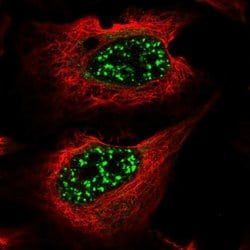
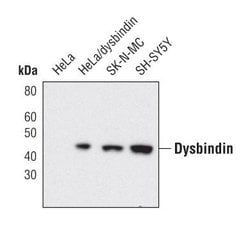

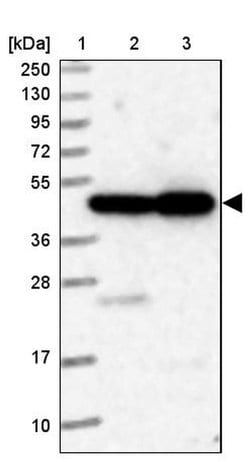
Description
- It is not recommended to aliquot this antibody
- This gene encodes a member of the enabled/ vasodilator-stimulated phosphoprotein
- Members of this gene family are involved in actin-based motility
- This protein is involved in regulating the assembly of actin filaments and modulates cell adhesion and motility
- Alternate splice variants of this gene have been correlated with tumor invasiveness in certain tissues and these variants may serve as prognostic markers
- A pseudogene of this gene is found on chromosome 3.