Hippocalcin Polyclonal Antibody, Invitrogen™
Manufacturer: Thermo Scientific
Select a Size
| Pack Size | SKU | Availability | Price |
|---|---|---|---|
| Each of 1 | PIPA519535-Each-of-1 | In Stock | ₹ 47,125.50 |
PIPA519535 - Each of 1
In Stock
Quantity
1
Base Price: ₹ 47,125.50
GST (18%): ₹ 8,482.59
Total Price: ₹ 55,608.09
Antigen
Hippocalcin
Classification
Polyclonal
Conjugate
Unconjugated
Gene
HPCA
Gene Alias
BDR2; calcium-binding protein; calcium-binding protein BDR-2; DYT2; hippocalcin; Hpca; hypothetical protein MGC73126; neuron-specific calcium-binding protein hippocalcin; P23K; zgc:73126
Host Species
Rabbit
Purification Method
Antigen affinity chromatography
Regulatory Status
RUO
Gene ID (Entrez)
15444, 29177, 3208, 393696
Content And Storage
Store at 4°C short term. For long term storage, store at -20°C, avoiding freeze/thaw cycles.
Form
Liquid
Applications
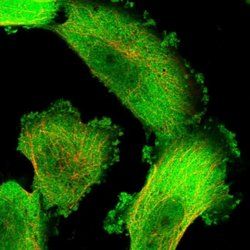
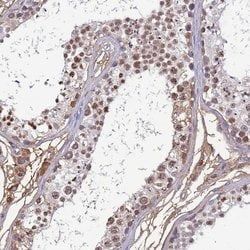
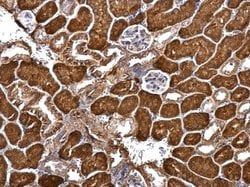
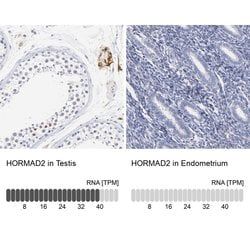
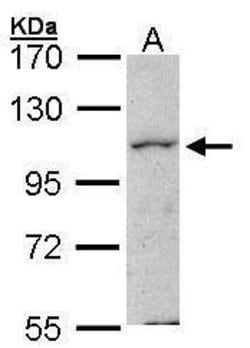
Immunocytochemistry, Immunoprecipitation, Western Blot
Concentration
1 mg/mL
Formulation
PBS with 0.02% sodium azide; pH 7.4
Gene Accession No.
P84074, P84075, P84076
Gene Symbols
HPCA
Immunogen
Synthetic peptide conjugated to KLH derived from within residues 150 to the C-terminus of Rat Hippocalcin.
Quantity
100 μg
Primary or Secondary
Primary
Target Species
Human, Mouse, Rat, Zebrafish
Product Type
Antibody
Isotype
IgG
Related Products



Description
- Heat mediated antigen retrieval recommended prior to tissue staining
- This antibody is predicted to react with chicken and cow based on sequence homology
- The protein encoded by this gene is a member of neuron-specific calcium-binding proteins family found in the retina and brain
- This protein is associated with the plasma membrane
- It has similarities to proteins located in the photoreceptor cells that regulate photosignal transduction in a calcium-sensitive manner
- This protein displays recoverin activity and a calcium-dependent inhibition of rhodopsin kinase
- It is identical to the rat and mouse hippocalcin proteins and thought to play an important role in neurons of the central nervous system in a number of species.