Caspase 2 Polyclonal Antibody, Invitrogen™
Manufacturer: Thermo Scientific
Select a Size
| Pack Size | SKU | Availability | Price |
|---|---|---|---|
| Each of 1 | PIPA520107-Each-of-1 | In Stock | ₹ 46,502.50 |
PIPA520107 - Each of 1
In Stock
Quantity
1
Base Price: ₹ 46,502.50
GST (18%): ₹ 8,370.45
Total Price: ₹ 54,872.95
Antigen
Caspase 2
Classification
Polyclonal
Conjugate
Unconjugated
Gene
CASP2
Gene Alias
CASP2; CASP-2; caspase 2; caspase 2 apoptosis-related cysteine peptidase; caspase-2; Caspase-2 subunit p12; Caspase-2 subunit p13; Caspase-2 subunit p18; ICH1; ICH-1; ICH-1 protease; ICH-1L; ICH-1L/1S; NEDD2; NEDD-2; Neural precursor cell expressed developmentally down-regulated protein 2; PPP1R57; Protease ICH-1; protein phosphatase 1, regulatory subunit 57
Host Species
Rabbit
Purification Method
Antigen affinity chromatography
Regulatory Status
RUO
Gene ID (Entrez)
12366, 835
Content And Storage
Maintain refrigerated at 2-8°C for up to 3 months. For long term storage store at -20°C
Form
Liquid
Applications
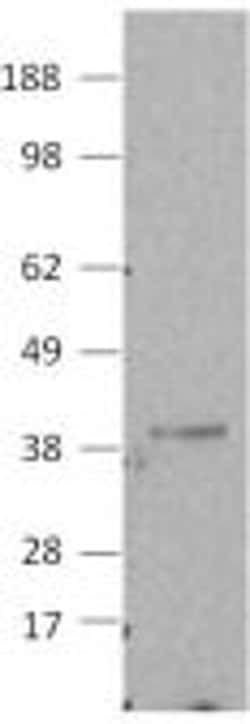
Immunocytochemistry, Western Blot
Concentration
1 mg/mL
Formulation
PBS with 0.02% sodium azide
Gene Accession No.
P29594, P42575
Gene Symbols
CASP2
Immunogen
A 16 amino acid peptide from the amino-terminus of human Caspase-2.
Quantity
100 μg
Primary or Secondary
Primary
Target Species
Human, Mouse
Product Type
Antibody
Isotype
IgG
Related Products




Description
- A suggested positive control is Ramos cell lysate
- PA5-20107 can be used with blocking peptide PEP-0225
- Caspase 2 gene encodes a protein which is a member of the cysteine-aspartic acid protease (caspase) family
- Sequential activation of caspases plays a central role in the execution-phase of cell apoptosis
- Caspases exist as inactive proenzymes which undergo proteolytic processing at conserved aspartic residues to produce two subunits, large and small, that dimerize to form the active enzyme
- The proteolytic cleavage of this protein is induced by a variety of apoptotic stimuli
- Alternative splicing of this gene results in multiple transcript variants that encode different isoforms.