PIPA520251
CD180 Polyclonal Antibody, Invitrogen™
Manufacturer: Thermo Scientific
Select a Size
| Pack Size | SKU | Availability | Price |
|---|---|---|---|
| Each of 1 | PIPA520251-Each-of-1 | In Stock | ₹ 46,502.50 |
PIPA520251 - Each of 1
In Stock
Quantity
1
Base Price: ₹ 46,502.50
GST (18%): ₹ 8,370.45
Total Price: ₹ 54,872.95
Antigen
CD180
Classification
Polyclonal
Conjugate
Unconjugated
Gene
Cd180
Gene Alias
CD180; CD180 antigen; CD180 molecule; F630107B15; LY64; Ly78; Ly-78; lymphocyte antigen 64; Lymphocyte antigen 78; lymphocyte antigen-64, radioprotective, 105kDa; MGC126233; MGC126234; radioprotective 105 kDa protein; RP105
Host Species
Rabbit
Purification Method
Antigen affinity chromatography
Regulatory Status
RUO
Gene ID (Entrez)
4064
Content And Storage
Maintain refrigerated at 2-8°C for up to 3 months. For long term storage store at -20°C
Form
Liquid
Applications
Immunohistochemistry, Western Blot
Concentration
1 mg/mL
Formulation
PBS with 0.02% sodium azide
Gene Accession No.
Q99467
Gene Symbols
Cd180
Immunogen
a 11 amino acid peptide from near the amino terminus of human RP105.
Quantity
100 μg
Primary or Secondary
Primary
Target Species
Human
Product Type
Antibody
Isotype
IgG
Related Products

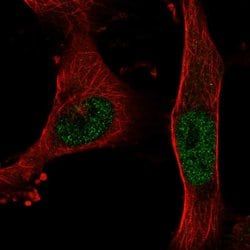
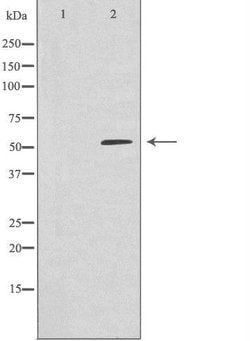

Description
- Despite its predicted molecular weight, RP105 often migrates at 95-105kDa in SDS-PAGE
- A suggested positive control is human spleen tissue lysate
- PA5-20251 can be used with blocking peptide PEP-0373
- CD180 (RP105, Bgp95, LY64) is a type I membrane glycoprotein of Toll-like receptor (TLR) family
- CD180 cytoplasmic tail is short and unlike the TLRs, it lacks the TIR domain
- CD180 expression is dependent on the coexpression of its helper molecule, MD-1, and mirrors that of TLR4 on antigen-presenting cells
- CD180 regulates recognition of LPS and signaling in B cells, via interacting directly with the TLR4 signaling complex, inhibiting its ability to bind microbial ligands
- Ligation of CD180 by monoclonal antibodies leads to B cell activation, upregulation of CD80/CD86, and increase in cell size
- CD180 consists of extracellular leucine-rich repeats (LRR) and a short cytoplasmic tail
- The extracellular LRR is part of the cell surface receptor complex, RP105/MD-1
- Diseases associated with CD180 dysfunction include Kawasaki Disease in children and may play a role in rheumatic disease pathology.