CD164 Polyclonal Antibody, Invitrogen™
Manufacturer: Thermo Scientific
Select a Size
| Pack Size | SKU | Availability | Price |
|---|---|---|---|
| Each of 1 | PIPA5104047-Each-of-1 | In Stock | ₹ 45,345.50 |
PIPA5104047 - Each of 1
In Stock
Quantity
1
Base Price: ₹ 45,345.50
GST (18%): ₹ 8,162.19
Total Price: ₹ 53,507.69
Antigen
CD164
Classification
Polyclonal
Conjugate
Unconjugated
Gene
CD164
Gene Alias
A115; A24; AA589639; AW540279; Cd164; CD164 antigen; CD164 antigen, sialomucin; CD164 molecule; CD164 molecule, sialomucin; CD164 variant C; c-Myc binding protein; deafness, autosomal dominant 66; DFNA66; endolyn; MGC-24; MGC-24v; MSSP; MUC-24; Multi-glycosylated core protein 24; sialomucin core protein 24
Host Species
Rabbit
Purification Method
Affinity chromatography
Regulatory Status
RUO
Gene ID (Entrez)
53599, 83689, 8763
Content And Storage
-20°C
Form
Liquid
Applications
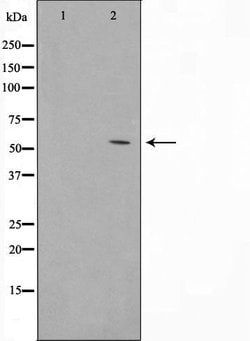
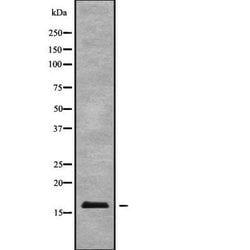
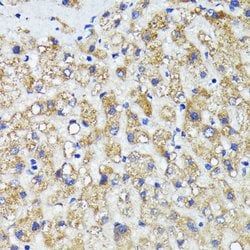
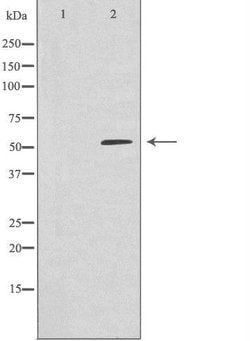
Immunocytochemistry, Immunohistochemistry (Paraffin), Western Blot
Concentration
1 mg/mL
Formulation
PBS with 50% glycerol and 0.02% sodium azide; pH 7.4
Gene Accession No.
Q04900, Q9QX82, Q9R0L9
Gene Symbols
CD164
Immunogen
A synthesized peptide derived from human CD164(Accession Q04900), corresponding to amino acid residues D99-V149.
Quantity
100 μL
Primary or Secondary
Primary
Target Species
Human, Mouse, Rat
Product Type
Antibody
Isotype
IgG
Related Products



Description
- Antibody detects endogenous levels of total CD164
- This gene encodes a transmembrane sialomucin and cell adhesion molecule that regulates the proliferation, adhesion and migration of hematopoietic progenitor cells
- The encoded protein also interacts with the C-X-C chemokine receptor type 4 and may regulate muscle development
- Elevated expression of this gene has been observed in human patients with Sezary syndrome, a type of blood cancer, and a mutation in this gene may be associated with impaired hearing.