ESRP2 Polyclonal Antibody, Invitrogen™
Manufacturer: Thermo Scientific
Select a Size
| Pack Size | SKU | Availability | Price |
|---|---|---|---|
| Each of 1 | PIPA521110-Each-of-1 | In Stock | ₹ 46,502.50 |
PIPA521110 - Each of 1
In Stock
Quantity
1
Base Price: ₹ 46,502.50
GST (18%): ₹ 8,370.45
Total Price: ₹ 54,872.95
Antigen
ESRP2
Classification
Polyclonal
Conjugate
Unconjugated
Gene
ESRP2
Gene Alias
9530027K23Rik; Epithelial splicing regulatory protein 2; ESRP2; PP7059; RBM35B; RGD1310855; RNA binding motif protein 35A; RNA binding motif protein 35B; RNA-binding motif protein 35B; RNA-binding protein 35B
Host Species
Rabbit
Purification Method
Antigen affinity chromatography
Regulatory Status
RUO
Gene ID (Entrez)
77411, 80004
Content And Storage
Maintain refrigerated at 2-8°C for up to 3 months. For long term storage store at -20°C
Form
Liquid
Applications
Immunohistochemistry, Western Blot
Concentration
1 mg/mL
Formulation
PBS with 0.02% sodium azide
Gene Accession No.
Q8K0G8, Q9H6T0
Gene Symbols
ESRP2
Immunogen
A 17 amino acid peptide near the carboxy terminus of human RBM35B.
Quantity
100 μg
Primary or Secondary
Primary
Target Species
Human, Mouse
Product Type
Antibody
Isotype
IgG
Related Products
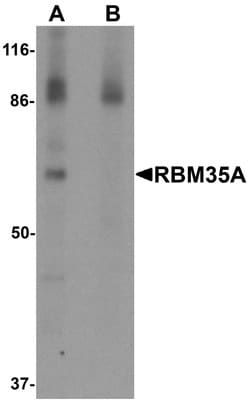
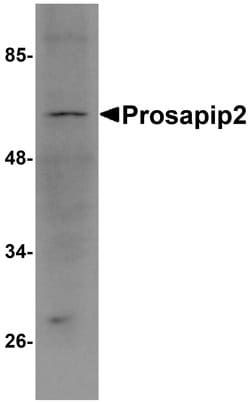
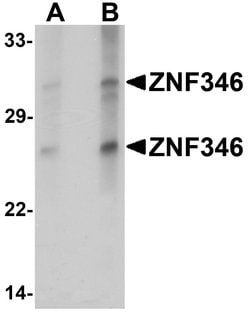
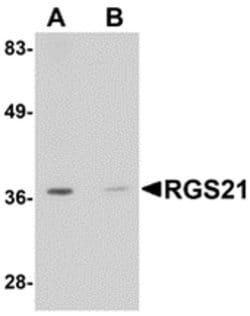
Description
- A suggested positive control is human lung tissue lysate
- PA5-21110 can be used with blocking peptide PEP-1224
- RBM35A, also known as ESRP2, is a mRNA splicing factor that with its related protein RBM35A (ESRP1) are coordinators of an epithelial cell-type-specific splicing program
- Both RBM35B and RBM35A are involved in posttranscriptional regulation of a number of genes such as FGFR2, CD44, CTNND1, and ENAH by exerting a differential effect on protein translation via 5' UTRs of mRNAs, suggesting that these proteins are global regulators of an epithelial regulatory network
- Loss of this global ESRP-regulated epithelial splicing program induces the phenotypic changes in cell morphology that are observed during the epithelial-mesenchymal transition.