KRT9 Polyclonal Antibody, Invitrogen™
Manufacturer: Thermo Scientific
Select a Size
| Pack Size | SKU | Availability | Price |
|---|---|---|---|
| Each of 1 | PIPA524783-Each-of-1 | In Stock | ₹ 47,036.50 |
PIPA524783 - Each of 1
In Stock
Quantity
1
Base Price: ₹ 47,036.50
GST (18%): ₹ 8,466.57
Total Price: ₹ 55,503.07
Antigen
KRT9
Classification
Polyclonal
Conjugate
Unconjugated
Gene
KRT9
Gene Alias
CK-9; cytokeratin 9; cytokeratin-9; EPPK; K9; keratin 9; keratin 9 (epidermolytic palmoplantar keratoderma); keratin 9, type I; keratin complex 1, acidic, gene 9; keratin, type I cytoskeletal 9; Keratin-9; Krt1-9; Krt9; spermatid perinuclear ring manchette protein K9; type I cytoskeletal 9
Host Species
Rabbit
Purification Method
Antigen affinity chromatography, Protein A
Regulatory Status
RUO
Gene ID (Entrez)
3857
Content And Storage
-20° C, Avoid Freeze/Thaw Cycles
Form
Liquid
Applications
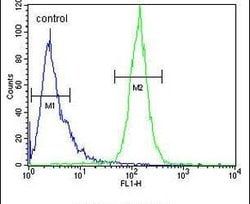
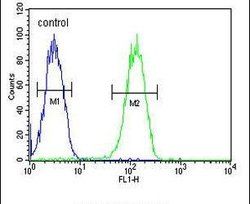
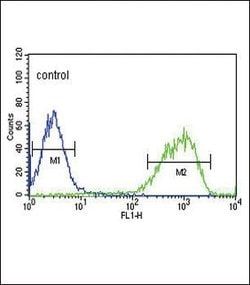
Flow Cytometry, Immunohistochemistry (Paraffin), Western Blot
Concentration
0.45 mg/mL
Formulation
PBS with 0.09% sodium azide
Gene Accession No.
P35527
Gene Symbols
KRT9
Immunogen
KLH conjugated synthetic peptide between 302-331 amino acids from the central region of human KRT9
Quantity
400 μL
Primary or Secondary
Primary
Target Species
Human
Product Type
Antibody
Isotype
IgG
Related Products
Description
- Cytokeratins are a subfamily of intermediate filament proteins and are characterized by a remarkable biochemical diversity, represented in human epithelial tissues by at least 20 different polypeptides
- They range in molecular weight between 40 kDa and 68 kDa and isoelectric pH between 4.9 - 7.8
- The individual human cytokeratins are numbered 1 to 20
- The various epithelia in the human body usually express cytokeratins which are not only characteristic of the type of epithelium, but also related to the degree of maturation or differentiation within an epithelium.