PIPA524727
Epiregulin Polyclonal Antibody, Invitrogen™
Manufacturer: Thermo Scientific
Select a Size
| Pack Size | SKU | Availability | Price |
|---|---|---|---|
| Each of 1 | PIPA524727-Each-of-1 | In Stock | ₹ 50,952.50 |
PIPA524727 - Each of 1
In Stock
Quantity
1
Base Price: ₹ 50,952.50
GST (18%): ₹ 9,171.45
Total Price: ₹ 60,123.95
Antigen
Epiregulin
Classification
Polyclonal
Conjugate
Unconjugated
Gene
Ereg
Gene Alias
Ep; Epiregulin; EPR; ER; EREG; Proepiregulin
Host Species
Rabbit
Purification Method
Antigen affinity chromatography, Protein A
Regulatory Status
RUO
Gene ID (Entrez)
2069
Content And Storage
-20° C, Avoid Freeze/Thaw Cycles
Form
Liquid
Applications
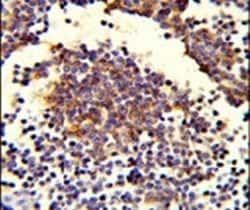
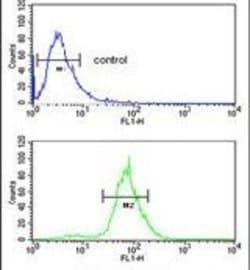
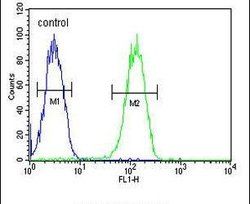
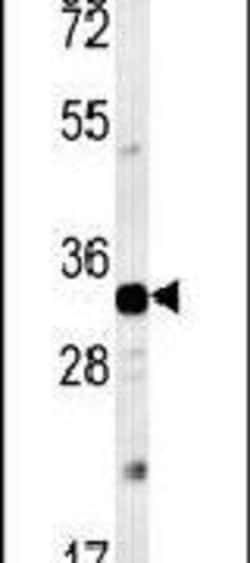
Flow Cytometry, Immunohistochemistry (Paraffin), Western Blot
Concentration
0.5 mg/mL
Formulation
PBS with 0.09% sodium azide
Gene Accession No.
O14944
Gene Symbols
Ereg
Immunogen
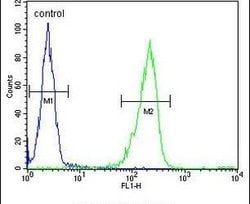
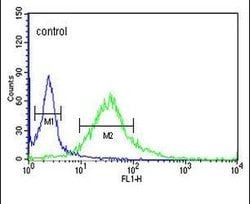
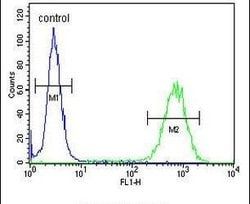
KLH conjugated synthetic peptide between 137-165 amino acids from the C-terminal region of human EREG
Quantity
400 μL
Primary or Secondary
Primary
Target Species
Human
Product Type
Antibody
Isotype
IgG
Related Products

Description
- Epiregulin is an EGF-related growth factor that binds specifically to EGFR (ErbB1) and ErbB4, but not ErbB2 or ErbB3
- It is expressed mainly in the placenta and peripheral blood leukocytes, as well as in certain carcinomas of the bladder, lung, kidney and colon
- Epiregulin stimulates the proliferation of keratinocytes, hepatocytes, fibroblasts and vascular smooth muscle cells
- It also inhibits the growth of several tumor-derived epithelial cell lines
- Human Epiregulin is initially synthesized as a glycosylated 19.0 kDa transmembrane precursor protein, which is processed by proteolytic cleavage to produce a 6.0 kDa mature secreted sequence.