PIPA524853
HAS1 Polyclonal Antibody, Invitrogen™
Manufacturer: Thermo Scientific
Select a Size
| Pack Size | SKU | Availability | Price |
|---|---|---|---|
| Each of 1 | PIPA524853-Each-of-1 | In Stock | ₹ 46,146.50 |
PIPA524853 - Each of 1
In Stock
Quantity
1
Base Price: ₹ 46,146.50
GST (18%): ₹ 8,306.37
Total Price: ₹ 54,452.87
Antigen
HAS1
Classification
Polyclonal
Conjugate
Unconjugated
Gene
Has1
Gene Alias
HA synthase 1; HAS; Has1; huHAS1; Hyaluronan synthase 1; hyaluronan synthase1; hyaluronate synthase 1; Hyaluronic acid synthase 1
Host Species
Rabbit
Purification Method
Antigen affinity chromatography, Protein A
Regulatory Status
RUO
Gene ID (Entrez)
3036
Content And Storage
-20° C, Avoid Freeze/Thaw Cycles
Form
Liquid
Applications
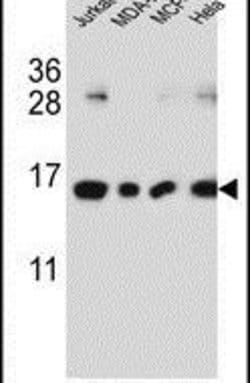
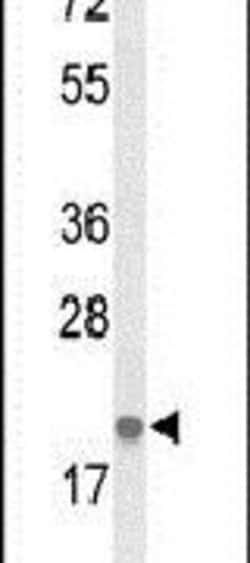
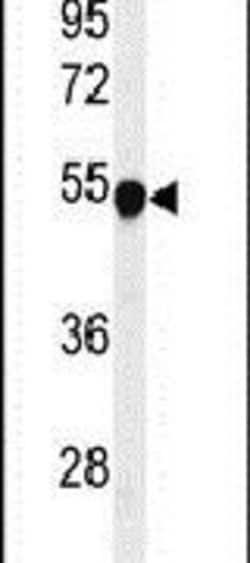
Western Blot
Concentration
0.5 mg/mL
Formulation
PBS with 0.09% sodium azide
Gene Accession No.
Q92839
Gene Symbols
Has1
Immunogen
KLH conjugated synthetic peptide between 166-193 amino acids from the central region of human HAS1
Quantity
400 μL
Primary or Secondary
Primary
Target Species
Human
Product Type
Antibody
Isotype
IgG
Related Products
Description
- This antibody is predicted to react with mouse based on sequence homology
- Hyaluronic acid is a high molecular weight unbranched polysaccharide synthesized by a wide variety of organisms from bacteria to mammals, and is a constituent of the extracellular matrix
- It consists of alternating glucuronic acid and N-acetylglucosamine residues that are linked by beta-1-3 and beta-1-4 glycosidic bonds
- HA is synthesized by membrane-bound synthase at the inner surface of the plasma membrane, and the chains are extruded through pore-like structures into the extracellular space
- It serves a variety of functions, including space filling, lubrication of joints, and provision of a matrix through which cells can migrate
- HA is actively produced during wound healing and tissue repair to provide a framework for ingrowth of blood vessels and fibroblasts
- Changes in the serum concentration of HA are associated with inflammatory and degenerative arthropathies such as rheumatoid arthritis
- In addition, the interaction of HA with the leukocyte receptor CD44 is important in tissue-specific homing by leukocytes, and overexpression of HA receptors has been correlated with tumor metastasis
- HAS1 is a member of the newly identified vertebrate gene family encoding putative hyaluronan synthases, and its amino acid sequence shows significant homology to the hasA gene product of Streptococcus pyogenes.