PAOX Polyclonal Antibody, Invitrogen™
Manufacturer: Thermo Scientific
Select a Size
| Pack Size | SKU | Availability | Price |
|---|---|---|---|
| Each of 1 | PIPA525758-Each-of-1 | In Stock | ₹ 45,968.50 |
PIPA525758 - Each of 1
In Stock
Quantity
1
Base Price: ₹ 45,968.50
GST (18%): ₹ 8,274.33
Total Price: ₹ 54,242.83
Antigen
PAOX
Classification
Polyclonal
Conjugate
Unconjugated
Gene
Paox
Gene Alias
2410012F02Rik; AI118225; exo-N4-amino; PAO; Paox; Peroxisomal N(1)-acetyl-spermine/spermidine oxidase; peroxisomal N1-acetyl-spermine/spermidine oxidase; polyamine oxidase; polyamine oxidase (exo-N4-amino); polyamine oxidase (exo-N4-amino) isoform 1; putative GTP-binding protein; UNQ1923/PRO4398
Host Species
Rabbit
Purification Method
Antigen affinity chromatography, Protein A
Regulatory Status
RUO
Gene ID (Entrez)
196743, 212503
Content And Storage
-20° C, Avoid Freeze/Thaw Cycles
Form
Liquid
Applications
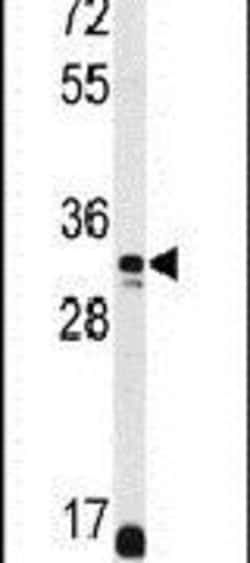
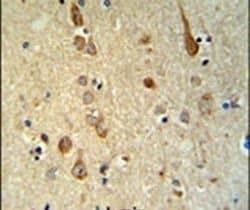
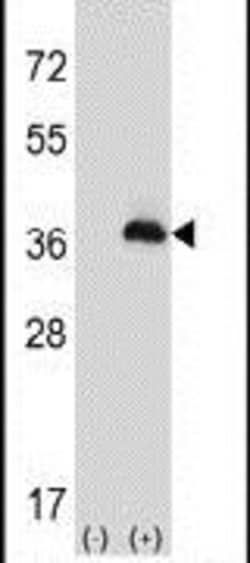
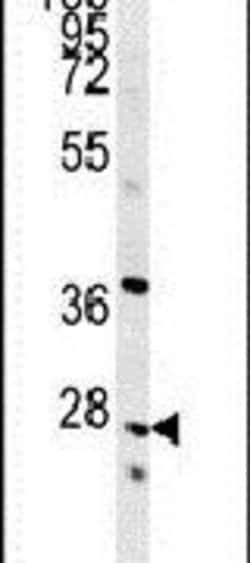
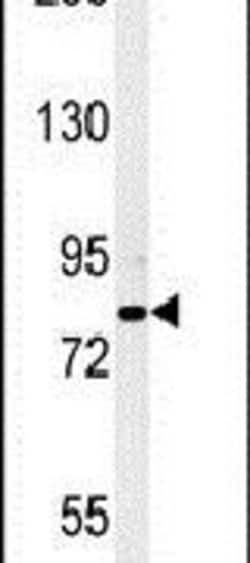
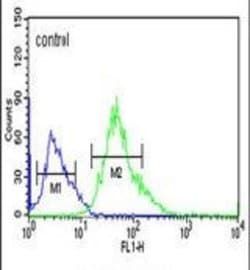
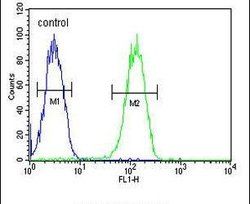
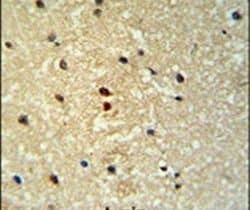
Immunohistochemistry (Paraffin), Western Blot
Concentration
0.5 mg/mL
Formulation
PBS with 0.09% sodium azide
Gene Accession No.
Q6QHF9, Q8C0L6
Gene Symbols
Paox
Immunogen
KLH conjugated synthetic peptide between 467-496 amino acids from the central region of human PAOX
Quantity
400 μL
Primary or Secondary
Primary
Target Species
Human, Mouse
Product Type
Antibody
Isotype
IgG
Related Products
Description
- Flavoenzyme which catalyzes the oxidation of N(1)-acetylspermine to spermidine and is thus involved in the polyamine back-conversion (PubMed:12477380)
- Can also oxidize N(1)-acetylspermidine to putrescine
- Substrate specificity: N(1)-acetylspermine = N(1)-acetylspermidine > N(1),N(12)-diacylspermine >> spermine
- Does not oxidize spermidine
- Plays an important role in the regulation of polyamine intracellular concentration and has the potential to act as a determinant of cellular sensitivity to the antitumor polyamine analogs (PubMed:12477380)
- [UniProt]