CHMP4B Polyclonal Antibody, Invitrogen™
Manufacturer: Thermo Scientific
Select a Size
| Pack Size | SKU | Availability | Price |
|---|---|---|---|
| Each of 1 | PIPA526536-Each-of-1 | In Stock | ₹ 48,905.50 |
PIPA526536 - Each of 1
In Stock
Quantity
1
Base Price: ₹ 48,905.50
GST (18%): ₹ 8,802.99
Total Price: ₹ 57,708.49
Antigen
CHMP4B
Classification
Polyclonal
Formulation
PBS with 0.09% sodium azide
Gene Accession No.
Q9H444
Gene Symbols
CHMP4B
Immunogen
KLH conjugated synthetic peptide between 51-79 amino acids from the N-terminal region of human CHMP4B
Quantity
400 μL
Primary or Secondary
Primary
Target Species
Human
Product Type
Antibody
Isotype
IgG
Applications
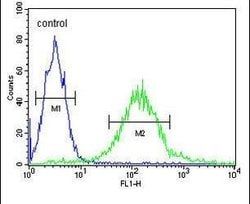
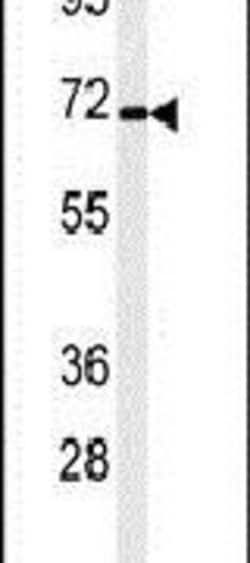
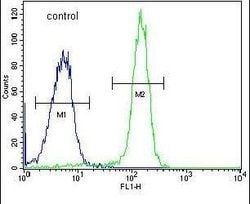
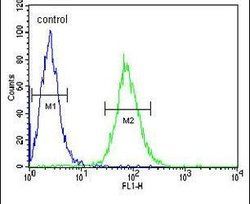
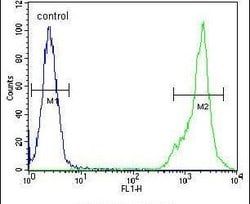
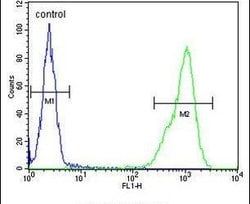
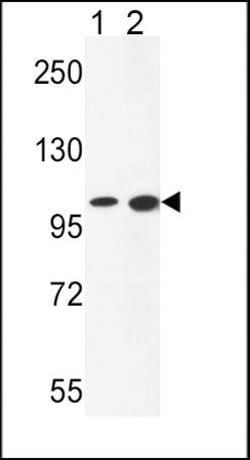
Flow Cytometry, Immunohistochemistry (Paraffin), Western Blot
Conjugate
Unconjugated
Gene
CHMP4B
Gene Alias
2010012F05Rik; C20orf178; C76846; charged multivesicular body protein 4b; CHMP4A; CHMP4B; chromatin modifying protein 4B; chromatin-modifying protein 4b; CTPP3; CTRCT31; dJ553F4.4; hSnf7-2; hVps32-2; RGD1309846; RGD1565889; Shax1; SNF7; SNF7 homolog associated with Alix 1; Snf7 homologue associated with Alix 1; Snf7-2; Vacuolar protein sorting-associated protein 32-2; vacuolar protein-sorting-associated protein 32-2; Vps32-2; VPS32B
Host Species
Rabbit
Purification Method
Antigen affinity chromatography, Protein A
Regulatory Status
RUO
Gene ID (Entrez)
128866
Content And Storage
-20° C, Avoid Freeze/Thaw Cycles
Form
Liquid
Related Products
Description
- This antibody is predicted to react with chicken, mouse, Xenopus and zebrafish based on sequence homology
- CHMP4B is a member of the chromatin-modifying protein/charged multivesicular body protein (CHMP) protein family
- The protein is part of the endosomal sorting complex required for transport (ESCRT) complex III (ESCRT-III), which functions in the sorting of endocytosed cell-surface receptors into multivesicular endosomes
- The ESCRT machinery also functions in the final abscisson stage of cytokinesis and in the budding of enveloped viruses such as HIV-1
- The three proteins of the CHMP4 subfamily interact with programmed cell death 6 interacting protein (PDCD6IP, also known as ALIX), which also functions in the ESCRT pathway
- The CHMP4 proteins assemble into membrane-attached 5-nm filaments that form circular scaffolds and promote or stabilize outward budding
- These polymers are proposed to help generate the luminal vesicles of multivesicular bodies.