PTPRD Polyclonal Antibody, Invitrogen™
Manufacturer: Thermo Scientific
Select a Size
| Pack Size | SKU | Availability | Price |
|---|---|---|---|
| Each of 1 | PIPA526593-Each-of-1 | In Stock | ₹ 48,905.50 |
PIPA526593 - Each of 1
In Stock
Quantity
1
Base Price: ₹ 48,905.50
GST (18%): ₹ 8,802.99
Total Price: ₹ 57,708.49
Antigen
PTPRD
Classification
Polyclonal
Conjugate
Unconjugated
Gene
PTPRD
Gene Alias
1110002J03Rik; 3000002J10Rik; B230219D21Rik; HPTP; HPTPD; HPTPDELTA; protein tyrosine phosphatase, receptor type D; protein tyrosine phosphatase, receptor type, D; protein tyrosine phosphatase, receptor type, delta polypeptide; Protein-tyrosine phosphatase delta; PTPD; Ptprd; receptor-type tyrosine-protein phosphatase delta; RPTPDELTA; R-PTP-delta
Host Species
Rabbit
Purification Method
Antigen affinity chromatography, Protein A
Regulatory Status
RUO
Gene ID (Entrez)
5789
Content And Storage
-20° C, Avoid Freeze/Thaw Cycles
Form
Liquid
Applications
Western Blot
Concentration
0.5 mg/mL
Formulation
PBS with 0.09% sodium azide
Gene Accession No.
P23468
Gene Symbols
PTPRD
Immunogen
KLH conjugated synthetic peptide between 343-371 amino acids from the N-terminal region of human PTPRD
Quantity
400 μL
Primary or Secondary
Primary
Target Species
Human
Product Type
Antibody
Isotype
Ig
Related Products
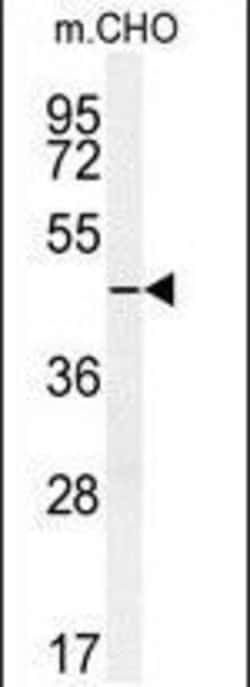
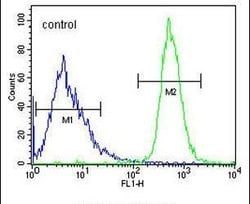
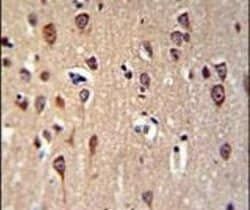
Description
- Description PTPRD is a member of the protein tyrosine phosphatase (PTP) family
- PTPs are known to be signaling molecules that regulate a variety of cellular processes including cell growth, differentiation, mitotic cycle, and oncogenic transformation
- This PTP contains an extracellular region, a single transmembrane segment and two tandem intracytoplasmic catalytic domains, and thus represents a receptor-type PTP
- The extracellular region of this protein is composed of three Ig-like and eight fibronectin type III-like domains
- Studies of the similar genes in chicken and fly suggest the role of this PTP is in promoting neurite growth, and regulating neurons axon guidance.