AANAT Polyclonal Antibody, Invitrogen™
Manufacturer: Thermo Scientific
Select a Size
| Pack Size | SKU | Availability | Price |
|---|---|---|---|
| Each of 1 | PIPA526631-Each-of-1 | In Stock | ₹ 46,502.50 |
PIPA526631 - Each of 1
In Stock
Quantity
1
Base Price: ₹ 46,502.50
GST (18%): ₹ 8,370.45
Total Price: ₹ 54,872.95
Antigen
AANAT
Classification
Polyclonal
Conjugate
Unconjugated
Gene
Aanat
Gene Alias
Aanat; AA-NAT; Aralkylamine N-acetyltransferase; arylakylamine N-acetyltransferase; Arylalkylamine N - acetyltransferase (Serotonin N - acetyltransferase); arylalkylamine N-acetyltransferase; DSPS; Nat-2; Nat4; Seretonin N-acetyltransferase; serotonin acetylase; Serotonin N-acetyltransferase; SNAT
Host Species
Rabbit
Purification Method
Antigen affinity chromatography, Protein A
Regulatory Status
RUO
Gene ID (Entrez)
15
Content And Storage
-20° C, Avoid Freeze/Thaw Cycles
Form
Liquid
Applications
Immunohistochemistry, Western Blot
Concentration
0.5 mg/mL
Formulation
PBS with 0.09% sodium azide
Gene Accession No.
Q16613
Gene Symbols
Aanat
Immunogen
KLH conjugated synthetic peptide between 27-54 amino acids from the N-terminal region of human AANAT
Quantity
400 μL
Primary or Secondary
Primary
Target Species
Human
Product Type
Antibody
Isotype
IgG
Related Products
Description
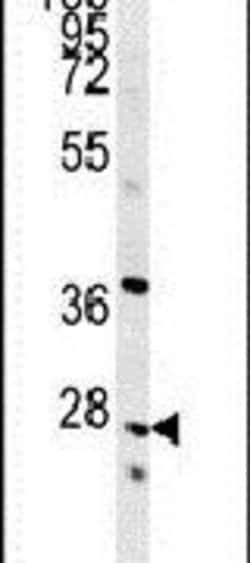
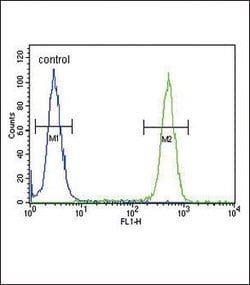
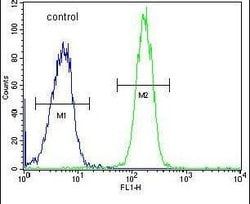
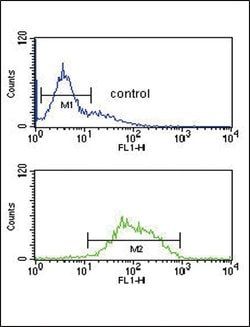
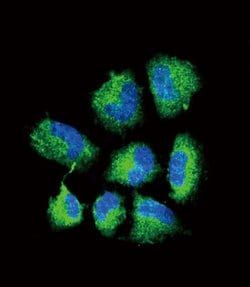
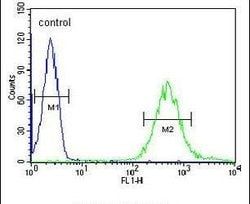
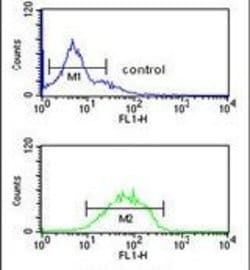
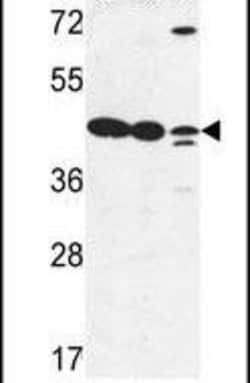
- PA5-26631 has successfully been used to detect serotonin N-AT in both WB and IF applications
- Arylalkylamine N-Acetyltransferase (AANAT) is the penultimate enzyme is melatonin synthesis
- Hormonal melatonin has been implicated in sleep and circadian clock function
- Large changes in the abundance of AANAT are believed to be responsible for the large day/night rhythms in melatonin synthesis in the pineal gland and retina
- Most research shows that AANAT activity is regulated by controlling the steady-state levels of the protein
- Recent research, however, suggests that another mechanism may also play a role in controlling melatonin production without altering AANAT protein and activity
- This mechanism may explain the sudden physiological increase in circulating melatonin observed at the onset of the dark period in humans.