RPL29 Polyclonal Antibody, Invitrogen™
Manufacturer: Thermo Scientific
Select a Size
| Pack Size | SKU | Availability | Price |
|---|---|---|---|
| Each of 1 | PIPA527545-Each-of-1 | In Stock | ₹ 52,688.00 |
PIPA527545 - Each of 1
In Stock
Quantity
1
Base Price: ₹ 52,688.00
GST (18%): ₹ 9,483.84
Total Price: ₹ 62,171.84
Antigen
RPL29
Classification
Polyclonal
Conjugate
Unconjugated
Gene
RPL29
Gene Alias
60S ribosomal protein L29; cell surface heparin-binding protein HIP; heparin/heparan sulfate-binding protein; heparin/heparan sulfate-interacting protein; HIP; HP/HS-interacting protein; HUMRPL29; L29; Large ribosomal subunit protein eL29; P23; ribosomal protein L29; ribosomal protein YL43 homologue; Rpl29; RPL29_3_370; RPL29P10; Rpl43
Host Species
Rabbit
Purification Method
Antigen affinity chromatography
Regulatory Status
RUO
Gene ID (Entrez)
6159
Content And Storage
Store at 4°C short term. For long term storage, store at -20°C, avoiding freeze/thaw cycles.
Form
Liquid
Applications
Immunocytochemistry, Immunohistochemistry (Paraffin), Western Blot
Concentration
1 mg/mL
Formulation
PBS with 1% BSA, 20% glycerol and 0.01% thimerosal; pH 7
Gene Accession No.
P47914
Gene Symbols
RPL29
Immunogen
Recombinant fragment corresponding to a region within amino acids 1 and 159 of Human RPL29
Quantity
100 μL
Primary or Secondary
Primary
Target Species
Human
Product Type
Antibody
Isotype
IgG
Related Products

Description
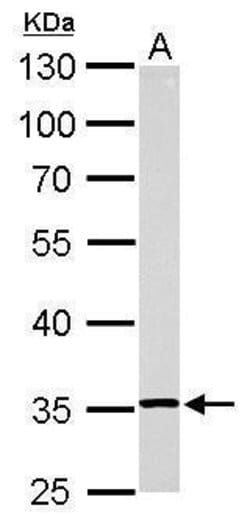
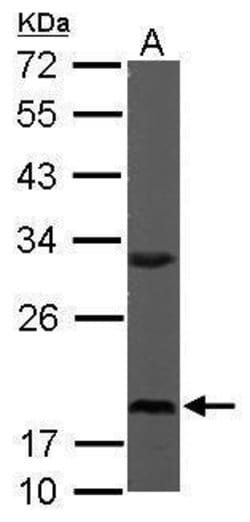
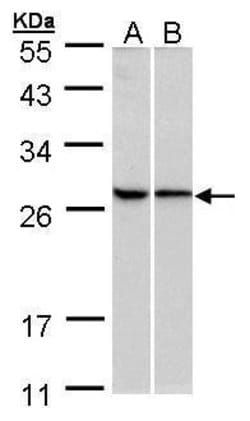
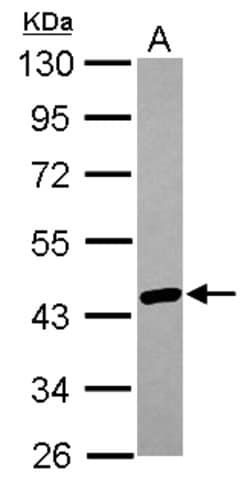
- Recommended positive controls: NT2D1, PC-3, U87-MG, SK-N-SH
- Predicted reactivity: Mouse (84%), Rat (85%), Pig (93%), Rhesus Monkey (97%), Chimpanzee (96%), Bovine (93%)
- Store product as a concentrated solution
- Centrifuge briefly prior to opening the vial
- Dual specificity protein phosphatases inactivate their target kinases by dephosphorylating both the phosphoserine/threonine and phosphotyrosine residues
- They negatively regulate members of the MAPK superfamily (MAPK/ERK, SAPK/JNK, p38), which is associated with cellular proliferation and differentiation
- Different members of this family of dual specificity phosphatases show distinct substrate specificities for MAPKs, different tissue distribution and subcellular localization, and different modes of inducibility of their expression by extracellular stimuli
- This gene product binds to and inactivates p38 and SAPK/JNK, but not MAPK/ERK
- Its subcellular localization is unique; it is evenly distributed in both the cytoplasm and the nucleus
- This gene is widely expressed in various tissues and organs, and its expression is elevated by stress stimuli
- Three transcript variants encoding two different isoforms have been found for this gene.