SEPP1 Polyclonal Antibody, Invitrogen™
Manufacturer: Thermo Scientific
Select a Size
| Pack Size | SKU | Availability | Price |
|---|---|---|---|
| Each of 1 | PIPA528281-Each-of-1 | In Stock | ₹ 46,502.50 |
PIPA528281 - Each of 1
In Stock
Quantity
1
Base Price: ₹ 46,502.50
GST (18%): ₹ 8,370.45
Total Price: ₹ 54,872.95
Antigen
SEPP1
Classification
Polyclonal
Conjugate
Unconjugated
Gene
SELENOP
Gene Alias
AU018766; D15Ucla1; Plasma selenoprotein P; Selenop; Selenoprotein P; selenoprotein P, plasma, 1; Selenoprotein Se-P1; Selenoprotein Se-P10; Selenoprotein Se-P2; Selenoprotein Se-P6; SELP; seP; Se-P; SEPP; SEPP1
Host Species
Rabbit
Purification Method
Antigen affinity chromatography
Regulatory Status
RUO
Gene ID (Entrez)
6414
Content And Storage
Store at 4°C short term. For long term storage, store at -20°C, avoiding freeze/thaw cycles.
Form
Liquid
Applications
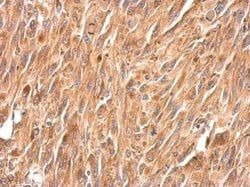
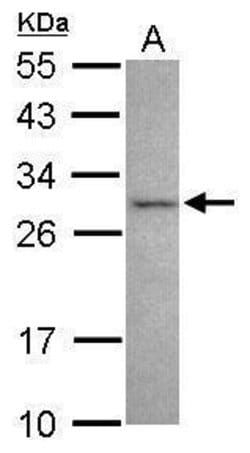
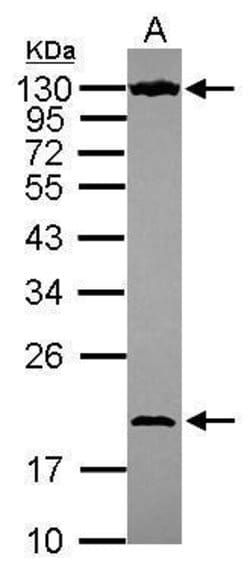
Immunohistochemistry (Paraffin), Western Blot
Concentration
1 mg/mL
Formulation
PBS with 1% BSA, 20% glycerol and 0.01% thimerosal; pH 7
Gene Accession No.
P49908
Gene Symbols
SELENOP
Immunogen
Recombinant protein fragment corresponding to a region within amino acids 157 and 411 of Human Selenoprotein P
Quantity
100 μL
Primary or Secondary
Primary
Target Species
Human
Product Type
Antibody
Isotype
IgG
Related Products





Description
- Recommended positive controls: Jurkat, Raji
- Predicted reactivity: Rhesus Monkey (91%), Chimpanzee (97%)
- Store product as a concentrated solution
- Centrifuge briefly prior to opening the vial
- A growing body of evidence relates selenium to cancer prevention, immune system function, male fertility, cardiovascular disorder, control of the aging and neurodiseases process
- Selenoproteins are thought to be responsible for the majority of these biomedical effects of selenium
- Approximately 17 selenoproteins have been identified until now
- Although the function of many selenoproteins are unknown, some play important roles in anti-oxidant mechanisms
- It has been also implicated in the regulation of signaling pathways through catalysis of thiol/disulfide exchange
- Selenoprotein M (SelM) is especially expressed in a mammalian brain and is localized to the perinuclear structures (Golgi/ER)
- The roles of selM have not been clearly identified until present time.