DUSP12 Polyclonal Antibody, Invitrogen™
Manufacturer: Thermo Scientific
Select a Size
| Pack Size | SKU | Availability | Price |
|---|---|---|---|
| Each of 1 | PIPA528960-Each-of-1 | In Stock | ₹ 46,502.50 |
PIPA528960 - Each of 1
In Stock
Quantity
1
Base Price: ₹ 46,502.50
GST (18%): ₹ 8,370.45
Total Price: ₹ 54,872.95
Antigen
DUSP12
Classification
Polyclonal
Conjugate
Unconjugated
Gene
Dusp12
Gene Alias
1190004O14Rik; AA027408; AW049275; dual specificity phosphatase 12; dual specificity phosphatase T-DSP4; Dual specificity phosphatase VH1; dual specificity protein phosphatase 12; Dual specificity tyrosine phosphatase YVH1; DUSP1; Dusp12; ESTM36; LMW-DSP4; mVH1; serine/threonine specific protein phosphatase; T-DSP4; VH1; YVH1; YVH1 protein-tyrosine phosphatase ortholog
Host Species
Rabbit
Purification Method
Antigen affinity chromatography
Regulatory Status
RUO
Gene ID (Entrez)
11266
Content And Storage
Store at 4°C short term. For long term storage, store at -20°C, avoiding freeze/thaw cycles.
Form
Liquid
Applications
Western Blot
Concentration
1 mg/mL
Formulation
0.1M tris glycine with 10% glycerol and 0.01% thimerosal; pH 7
Gene Accession No.
Q9UNI6
Gene Symbols
Dusp12
Immunogen
Synthetic peptide corresponding to a region within amino acids 32 and 124 of Human DUSP12
Quantity
100 μL
Primary or Secondary
Primary
Target Species
Human
Product Type
Antibody
Isotype
IgG
Related Products
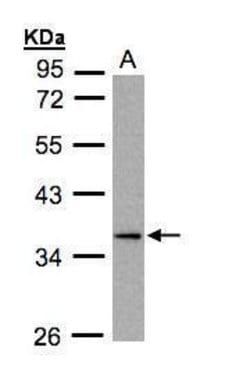
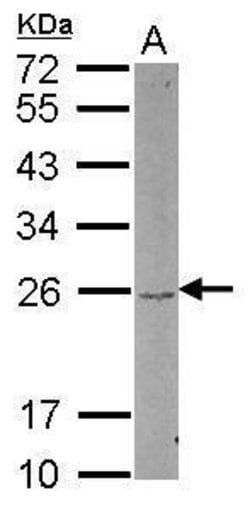

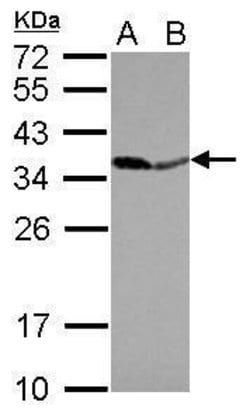
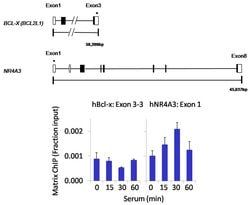

Description
- Recommended positive controls: H1299
- Predicted reactivity: Mouse (100%), Rat (100%)
- Store product as a concentrated solution
- Centrifuge briefly prior to opening the vial
- Dual specificity phosphatase (DUSP) inactivate their target kinases by dephosphorylating both the phosphoserine/threonine and phosphotyrosine residues
- DUSPs can be divided into six subgroups on the basis of sequence similarity (PRLs, Cdc14 phosphatases, PTENs, myotubularins, MKPs, atypical DUSPs)
- DUSP inhibitors might be used to manipulate MAPK and cellular responses in both positive and negative ways
- The regulated expression and activity of DUSP family members in different cells and tissues controls MAPK intensity and duration to determine the type of physiological response
- DUSP12 (YVH1, GKAP) contains the consensus DUSP catalytic domain as well as an extended C-terminal domain of unknown function, thought to be related to its potential role in glucokinase regulation
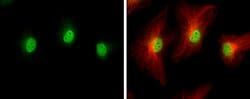
- It is localized in the cytoplasm and nucleus.